
描述
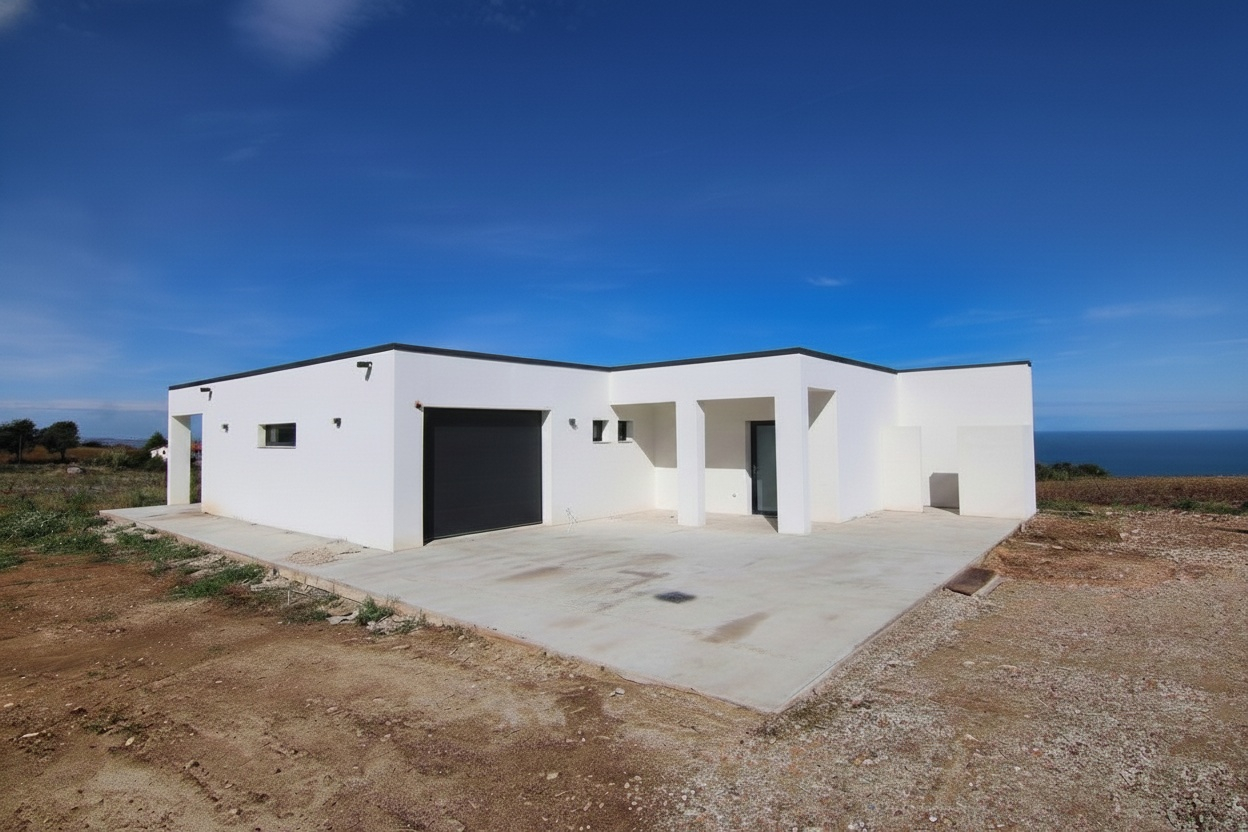
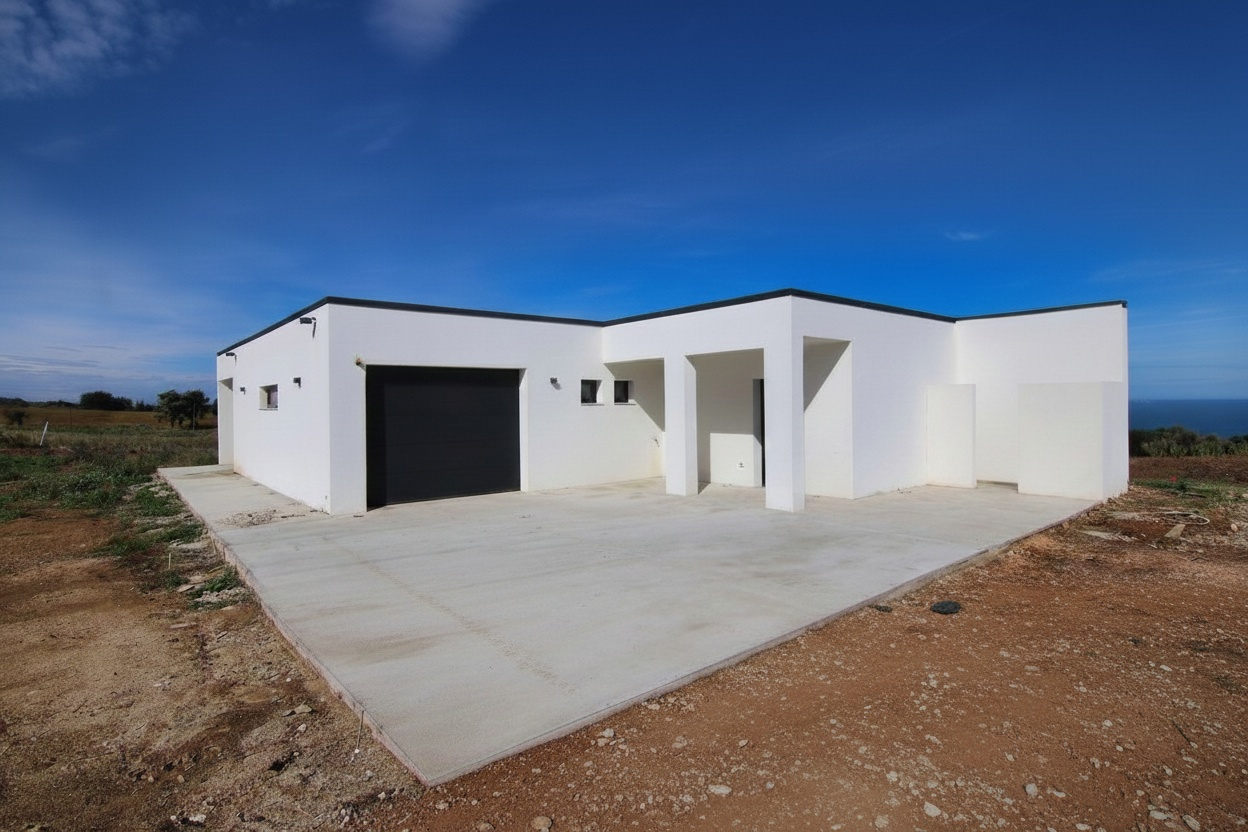
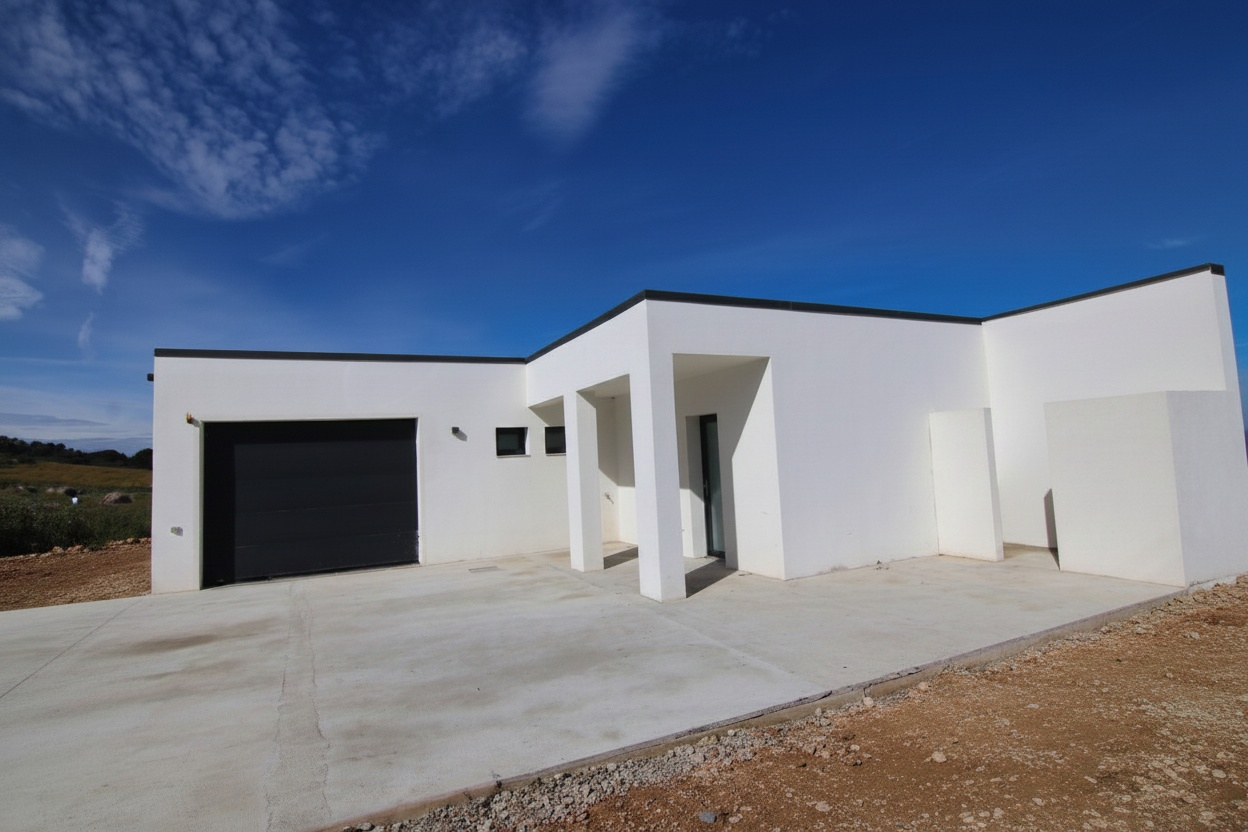
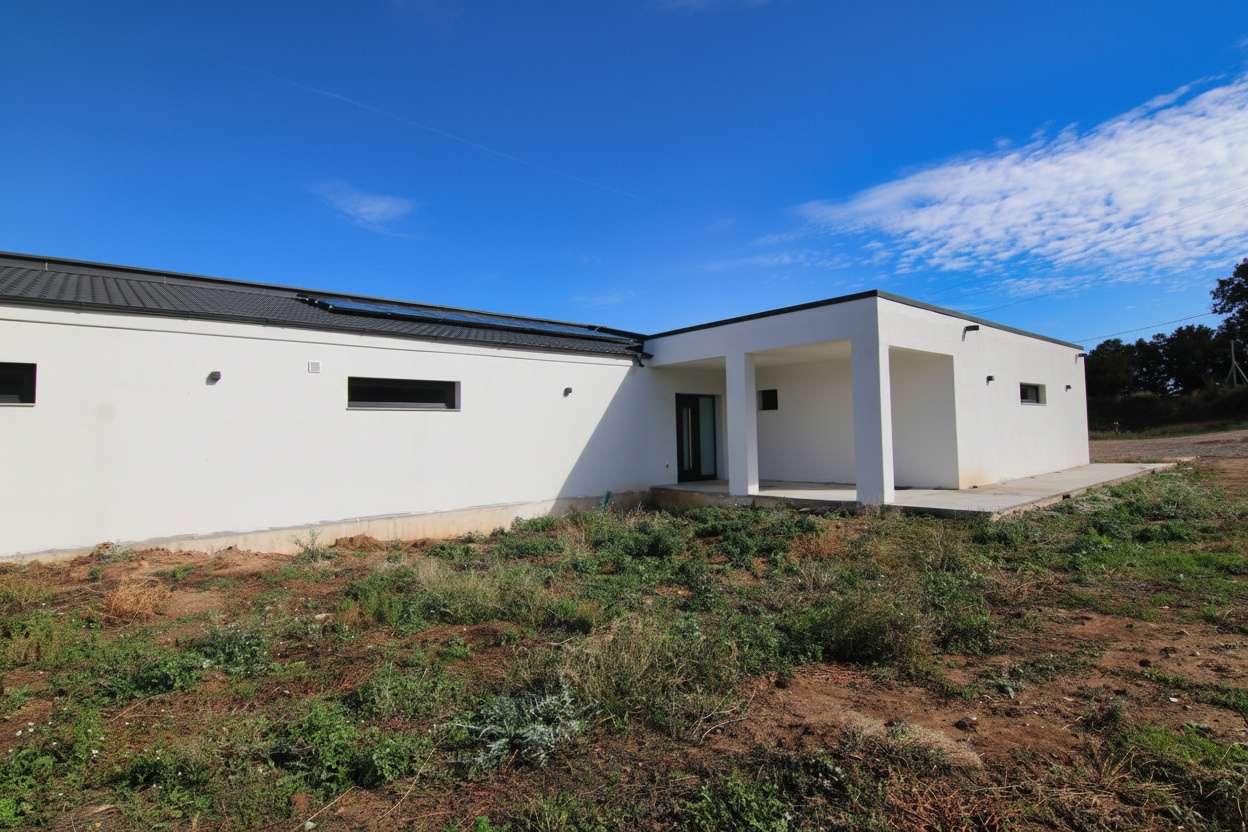
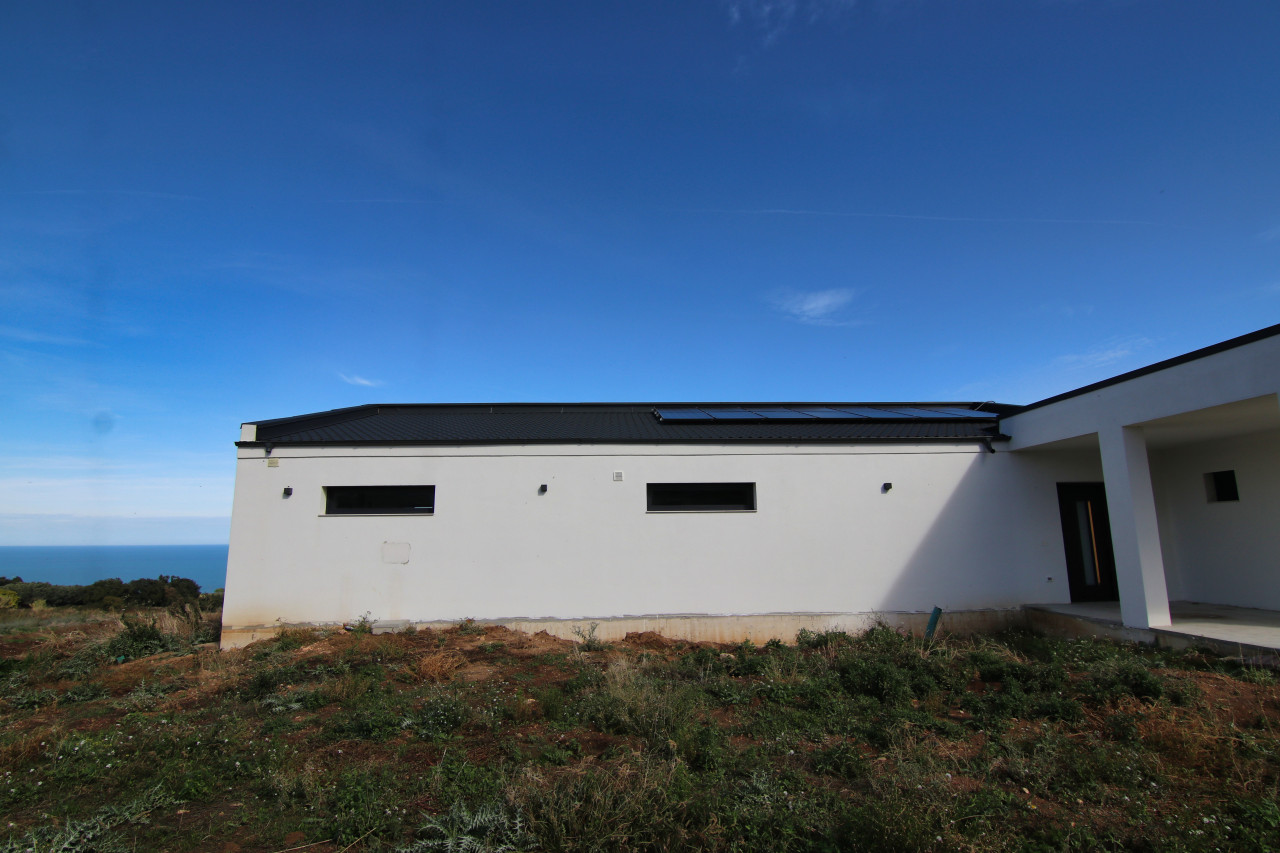
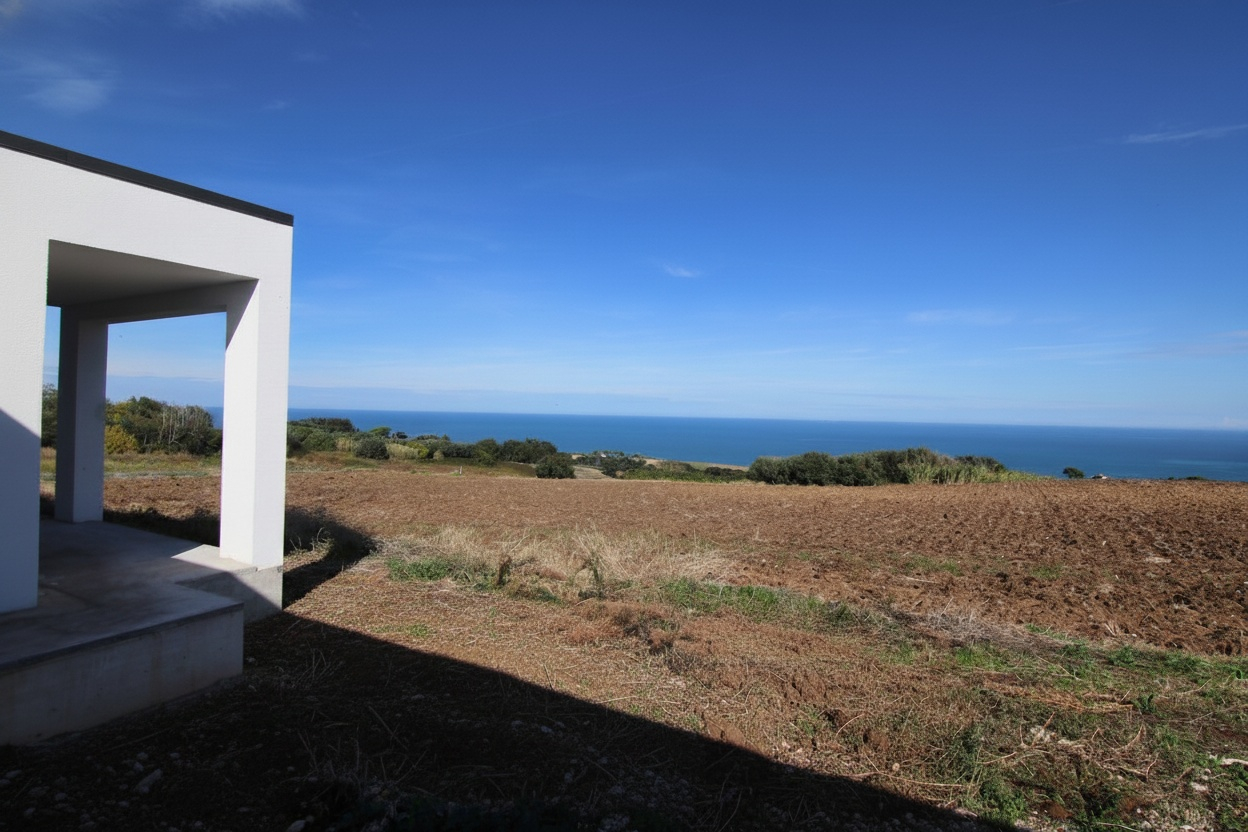
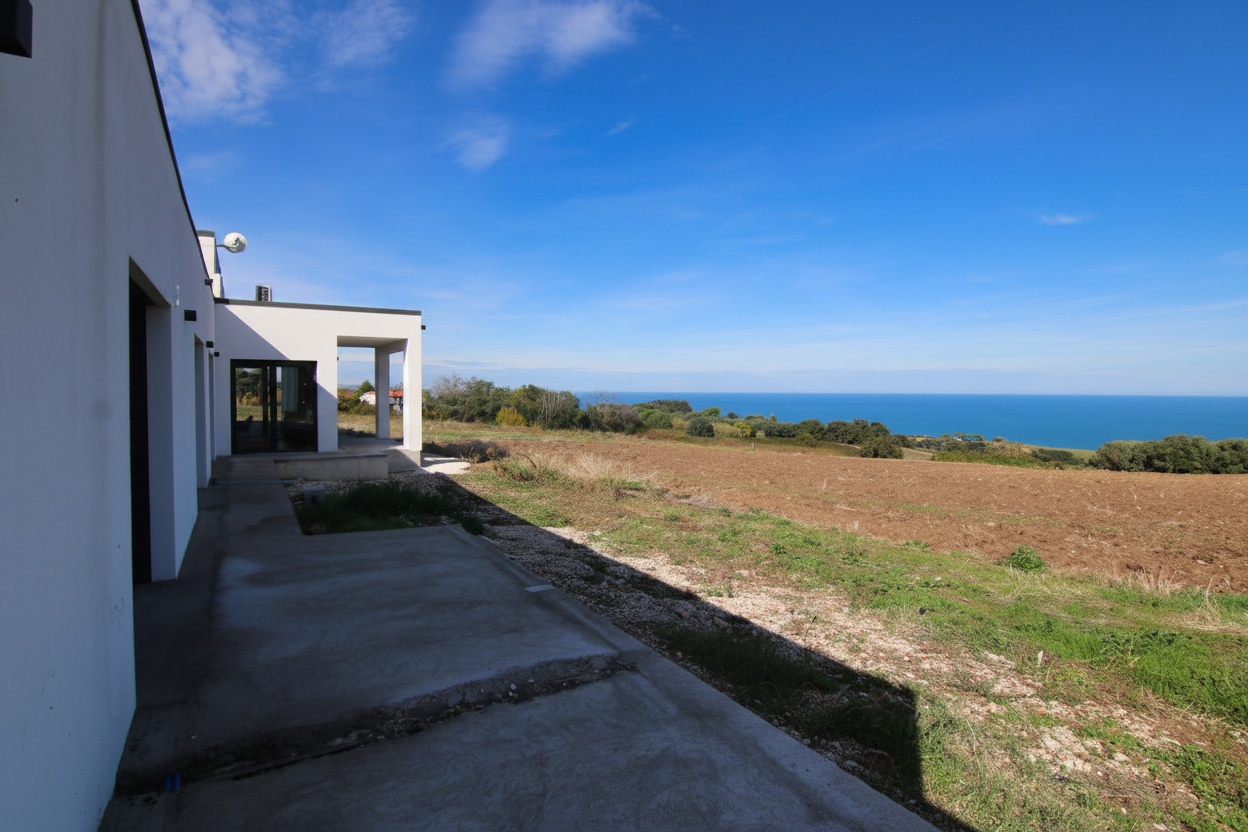
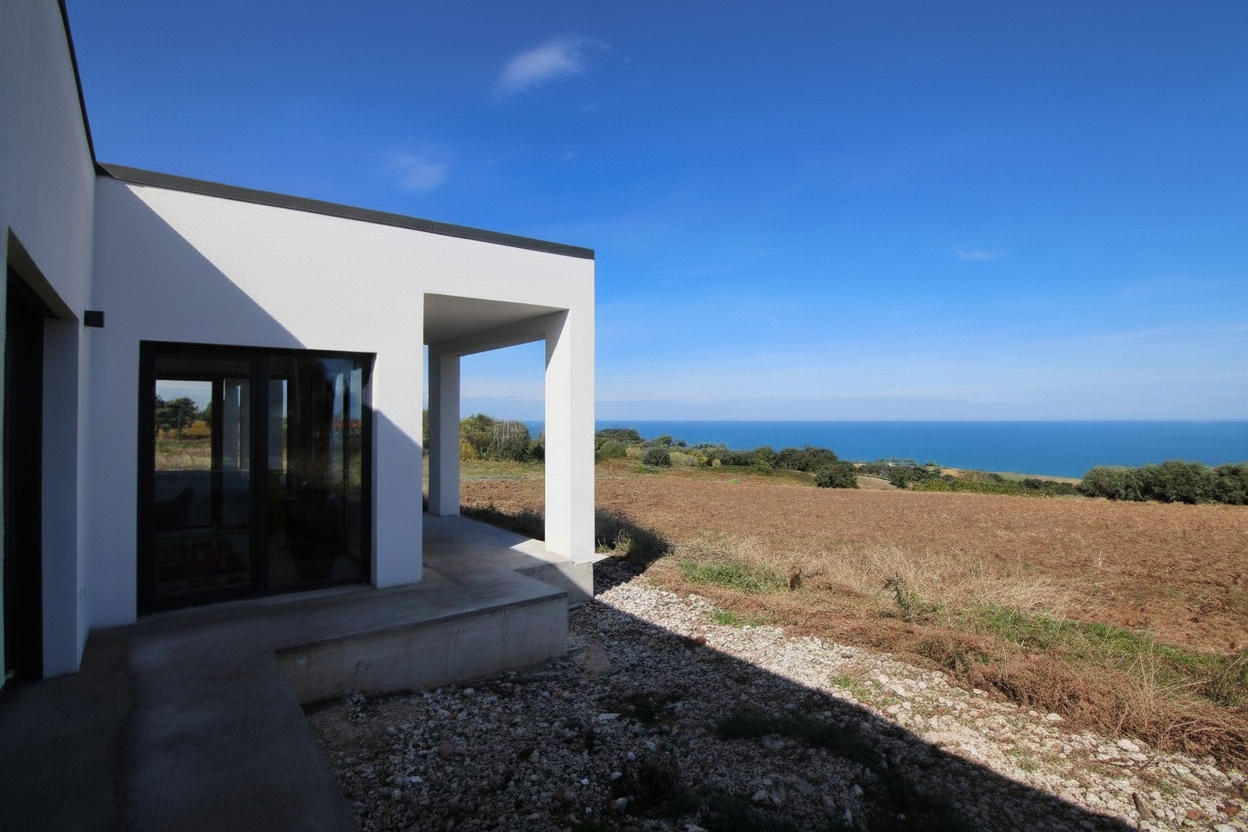
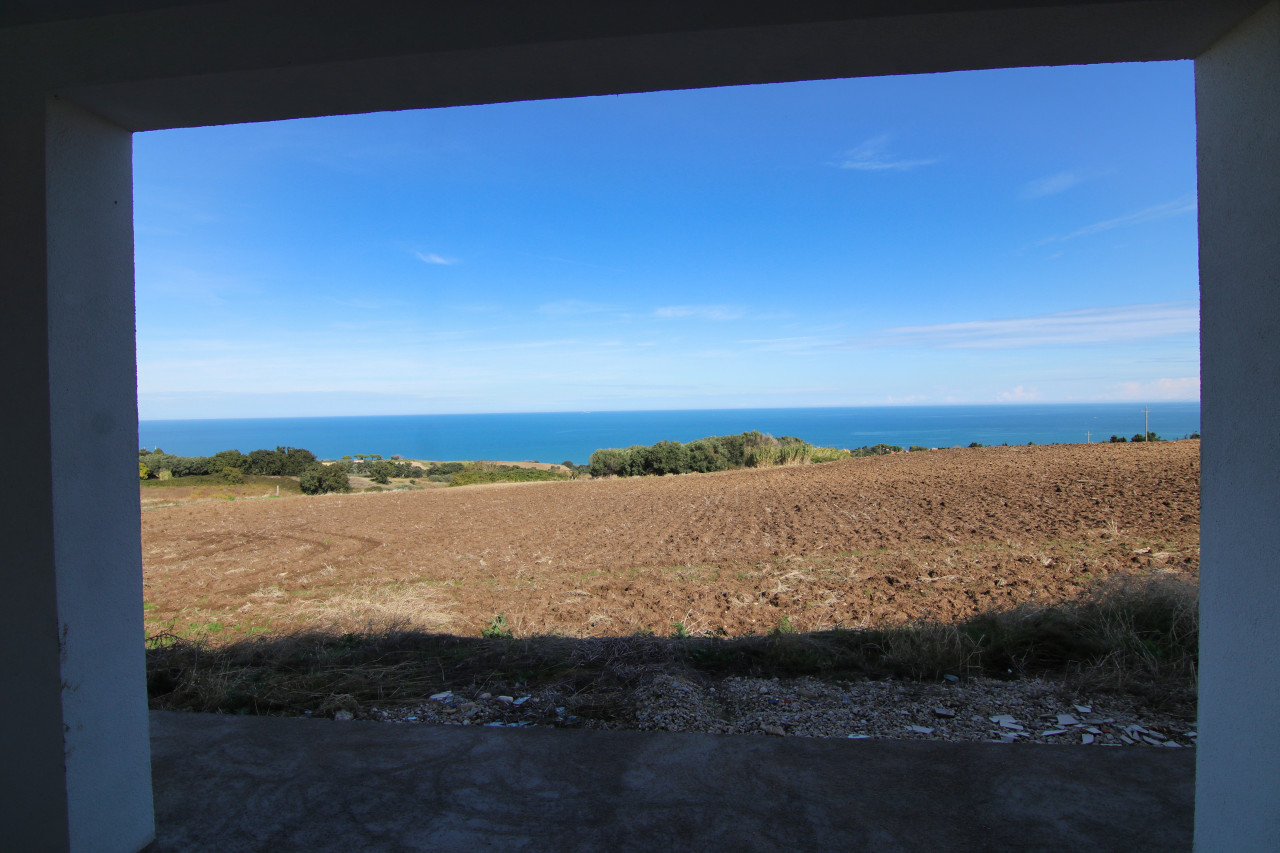
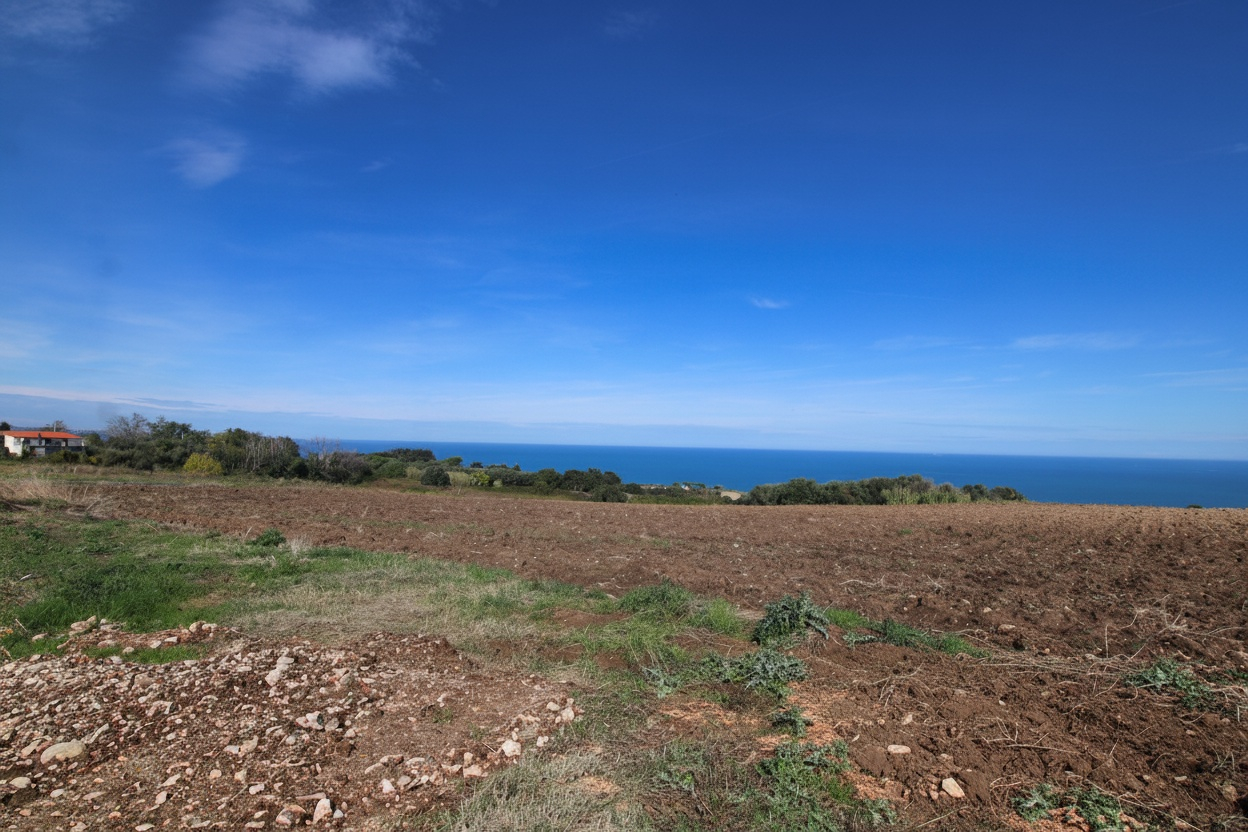
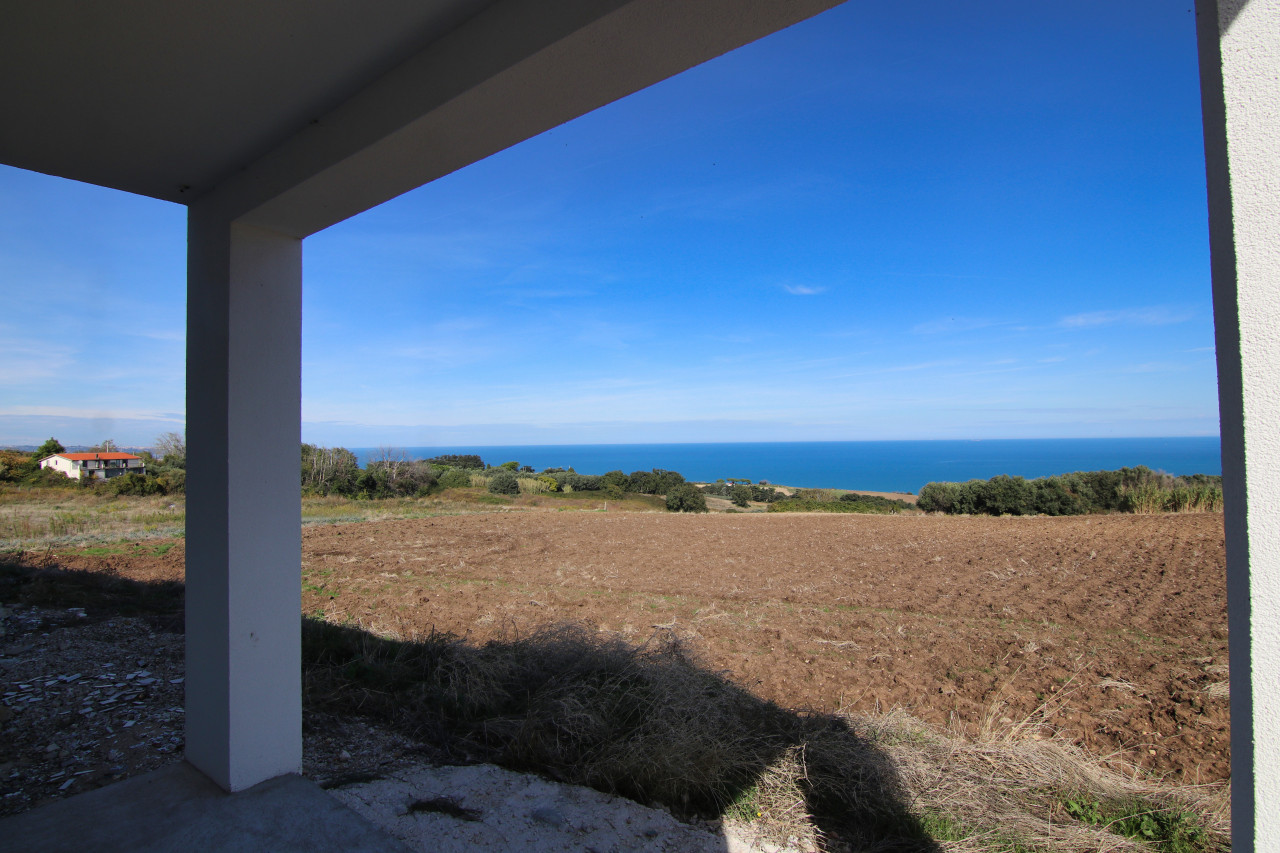
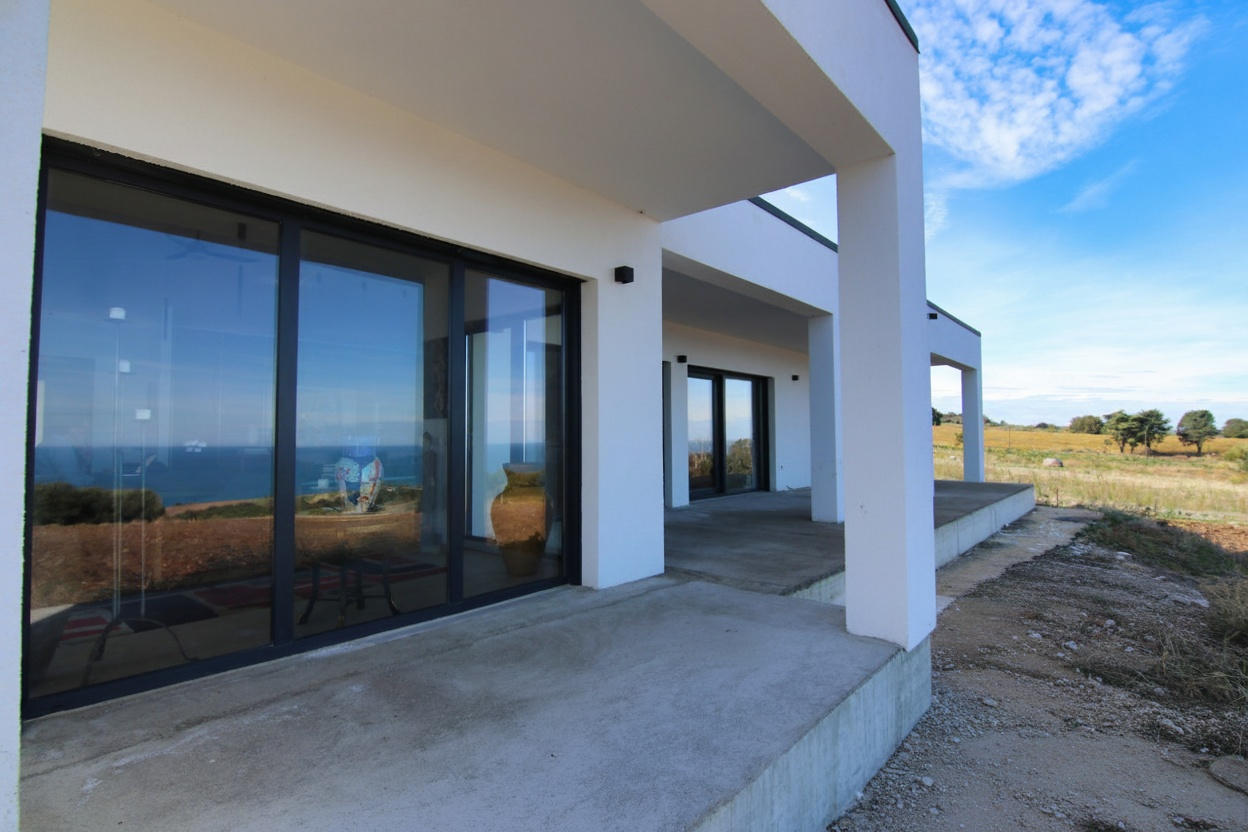
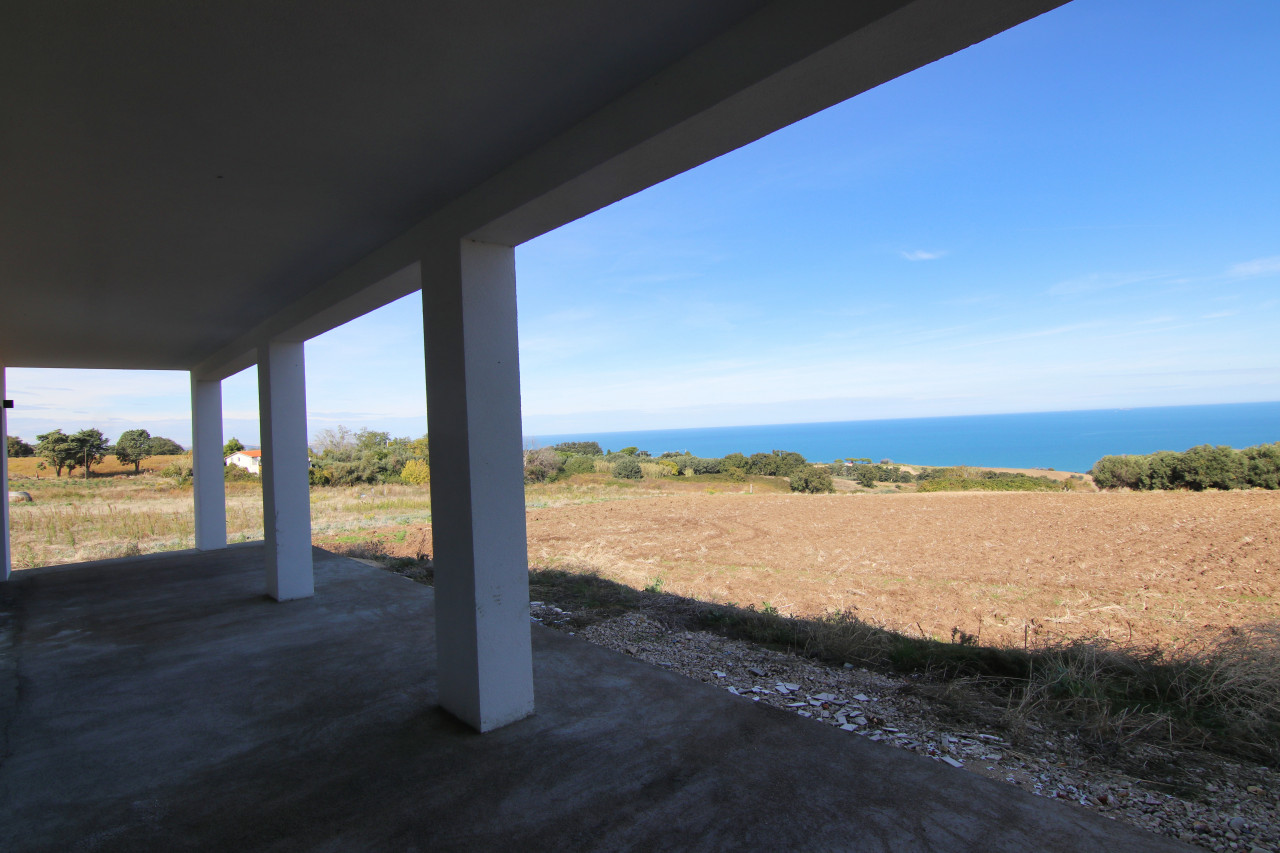
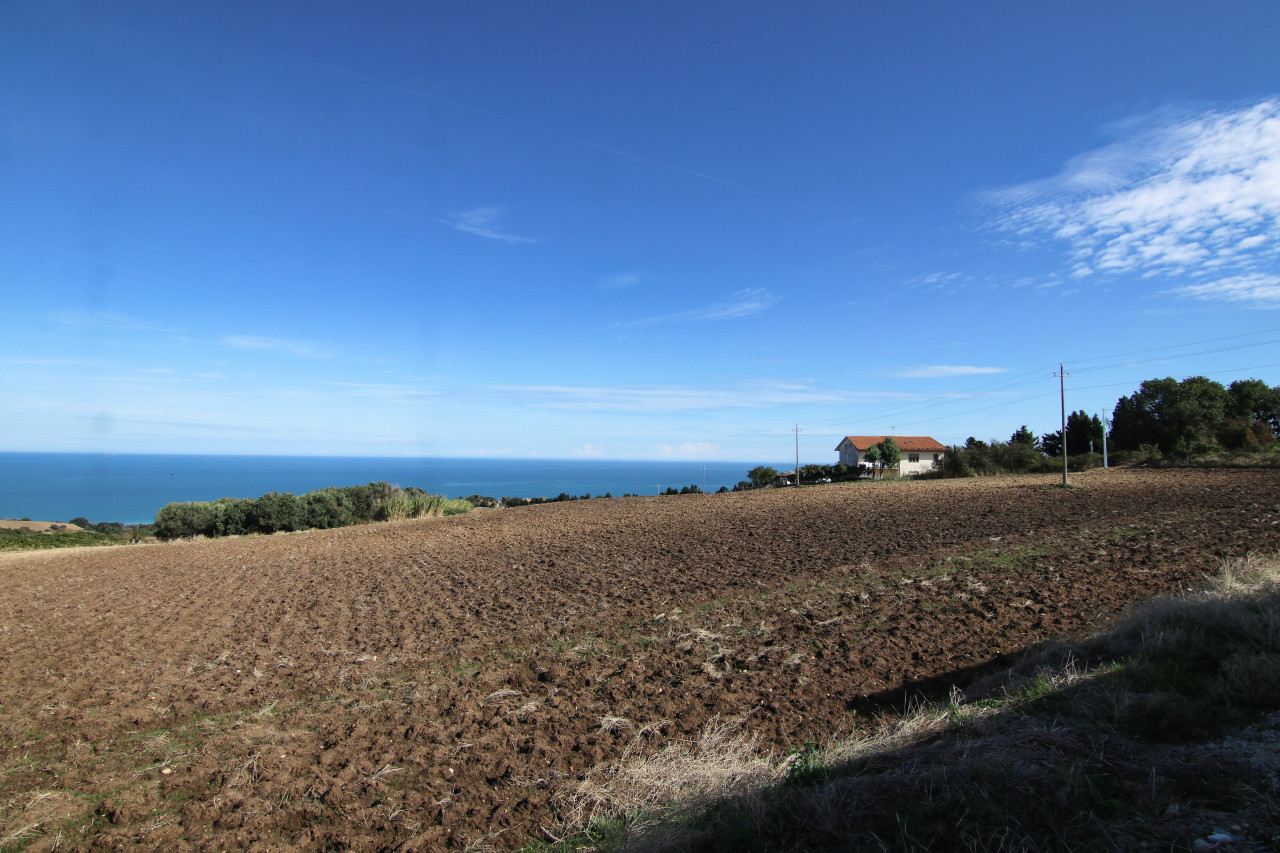
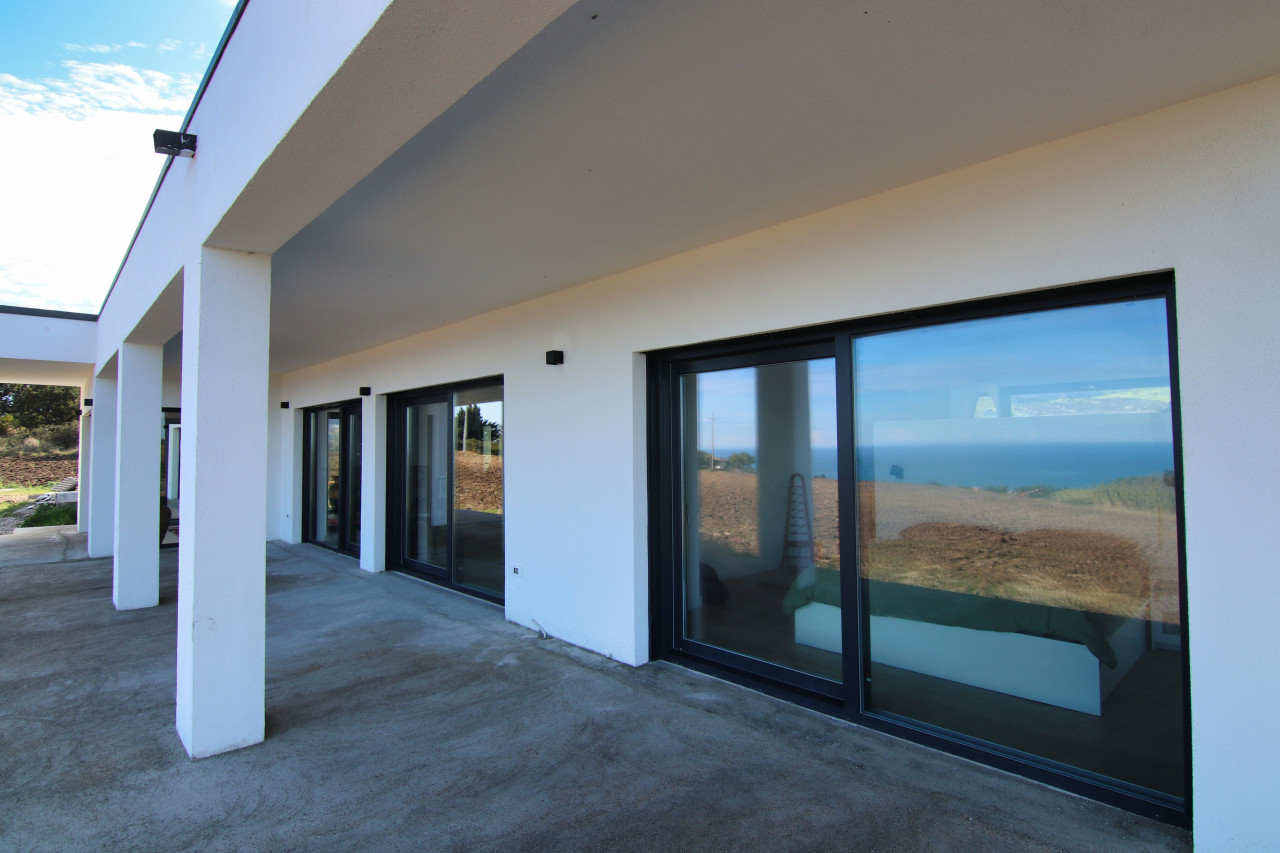
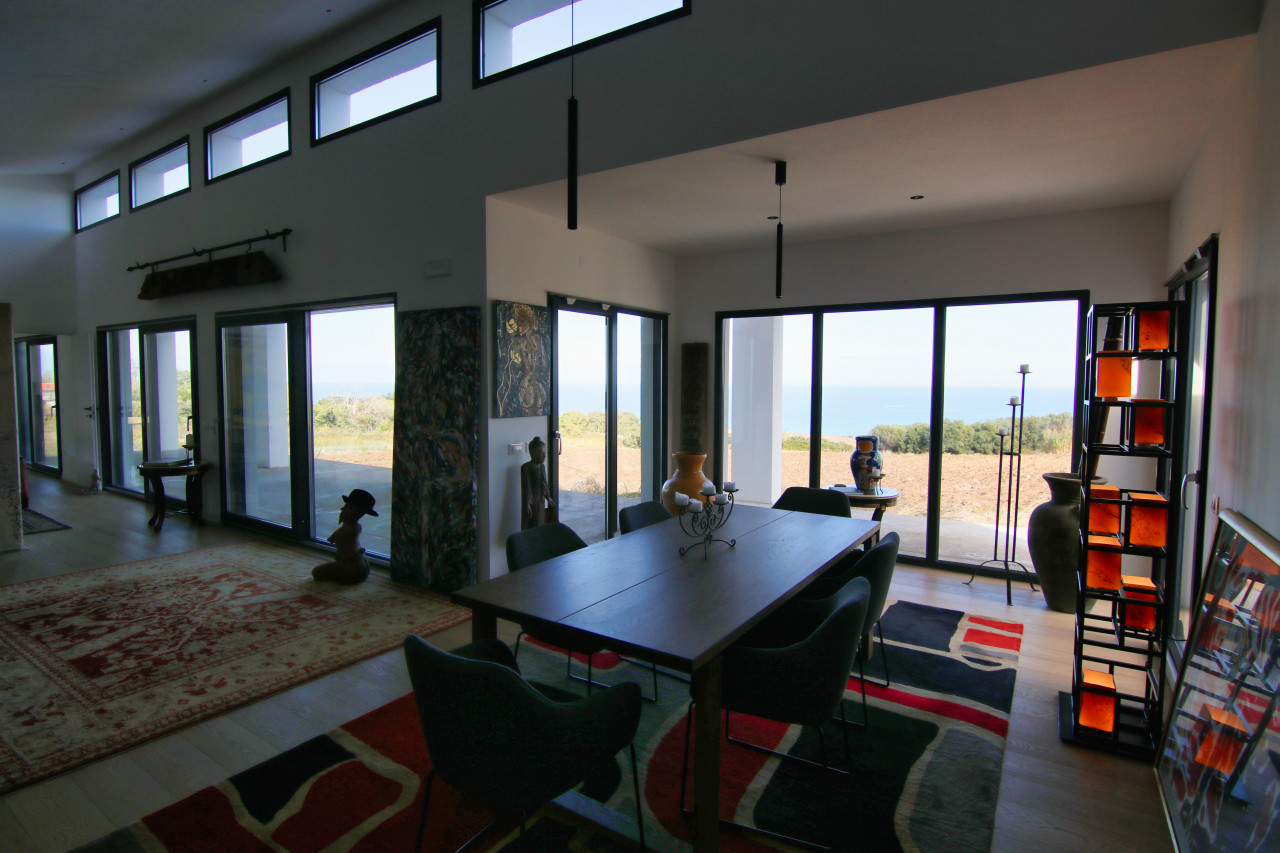
The villa appears almost without warning, when the road lifts gently between the hills of Petacciato. The sea stretches in the distance like the backdrop of an oil painting, against which the house rises as a white, essential monolith set into a landscape that still retains a trace of wilderness. The large square window sees nothing but the endless sea.
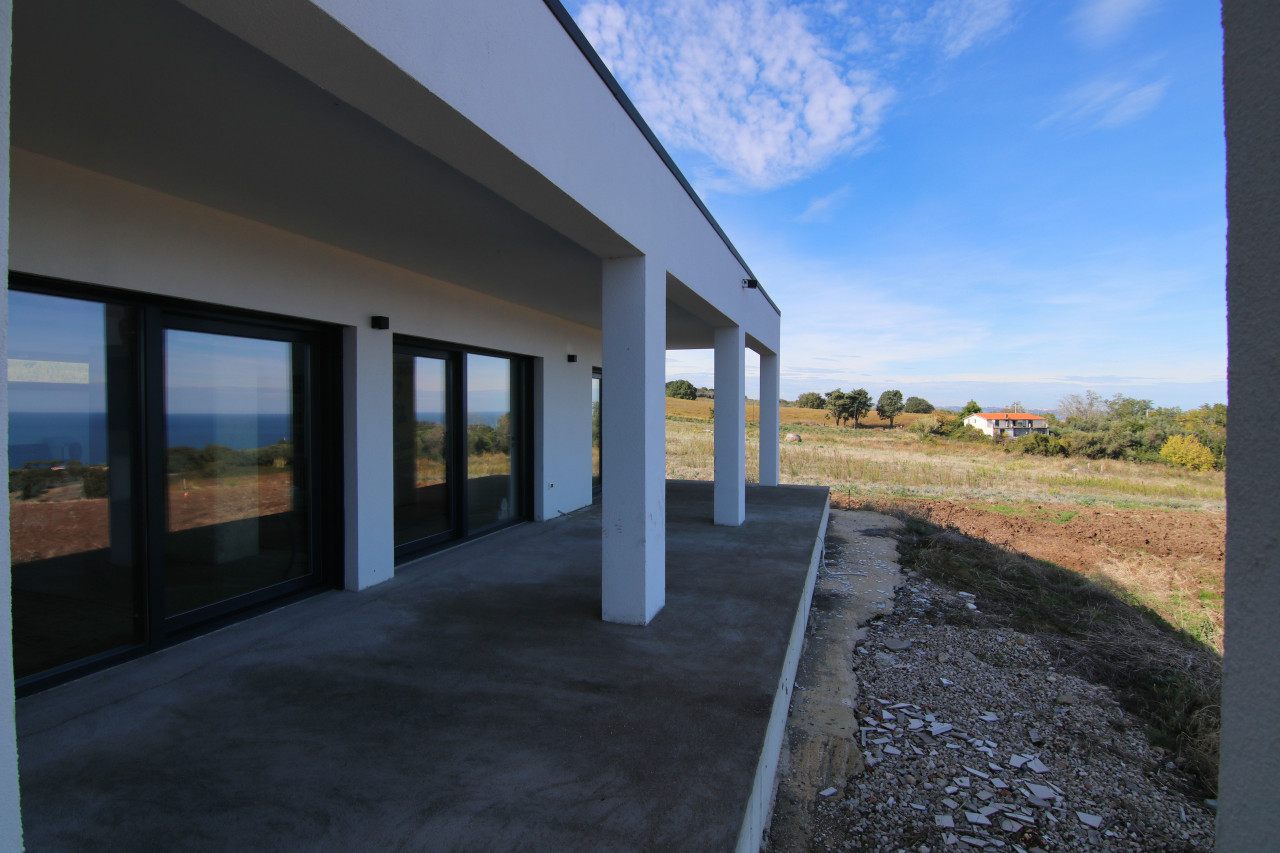
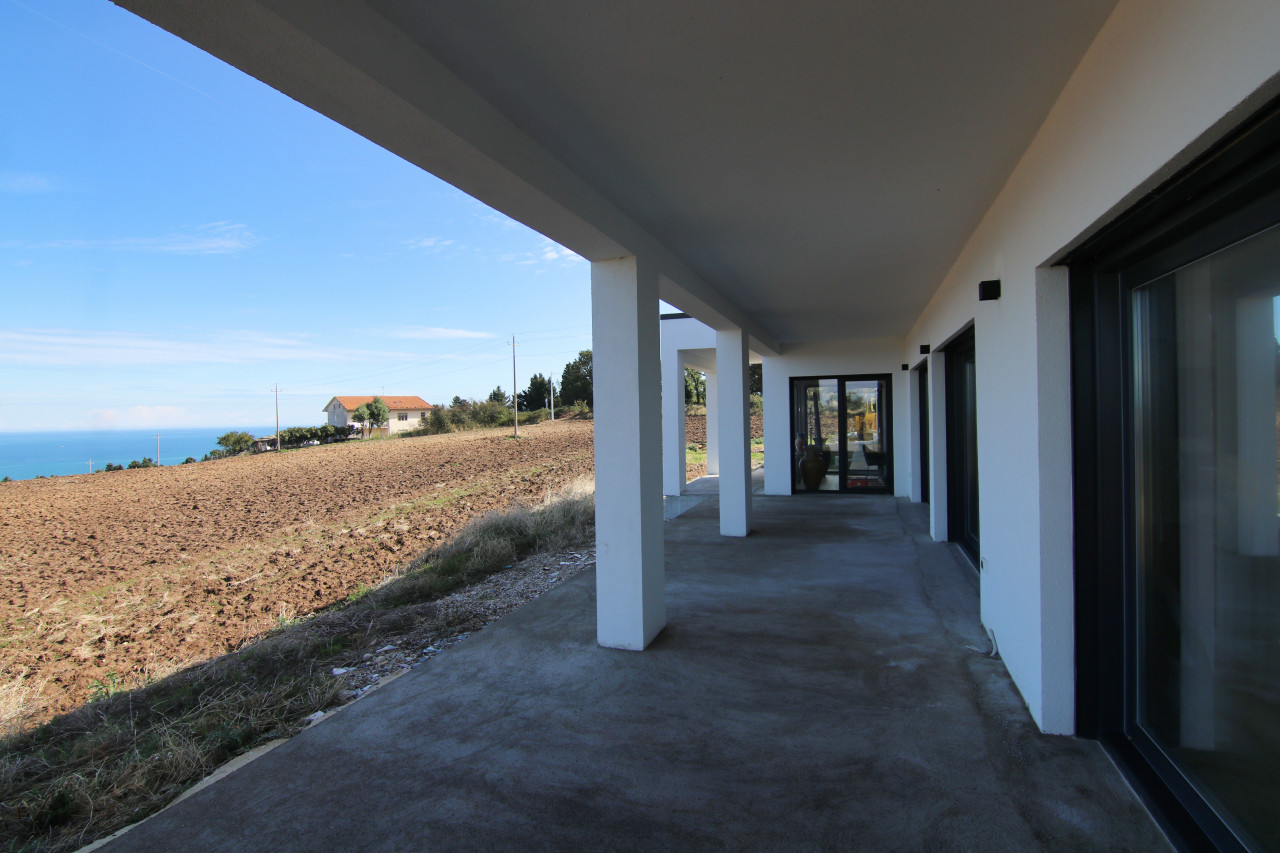
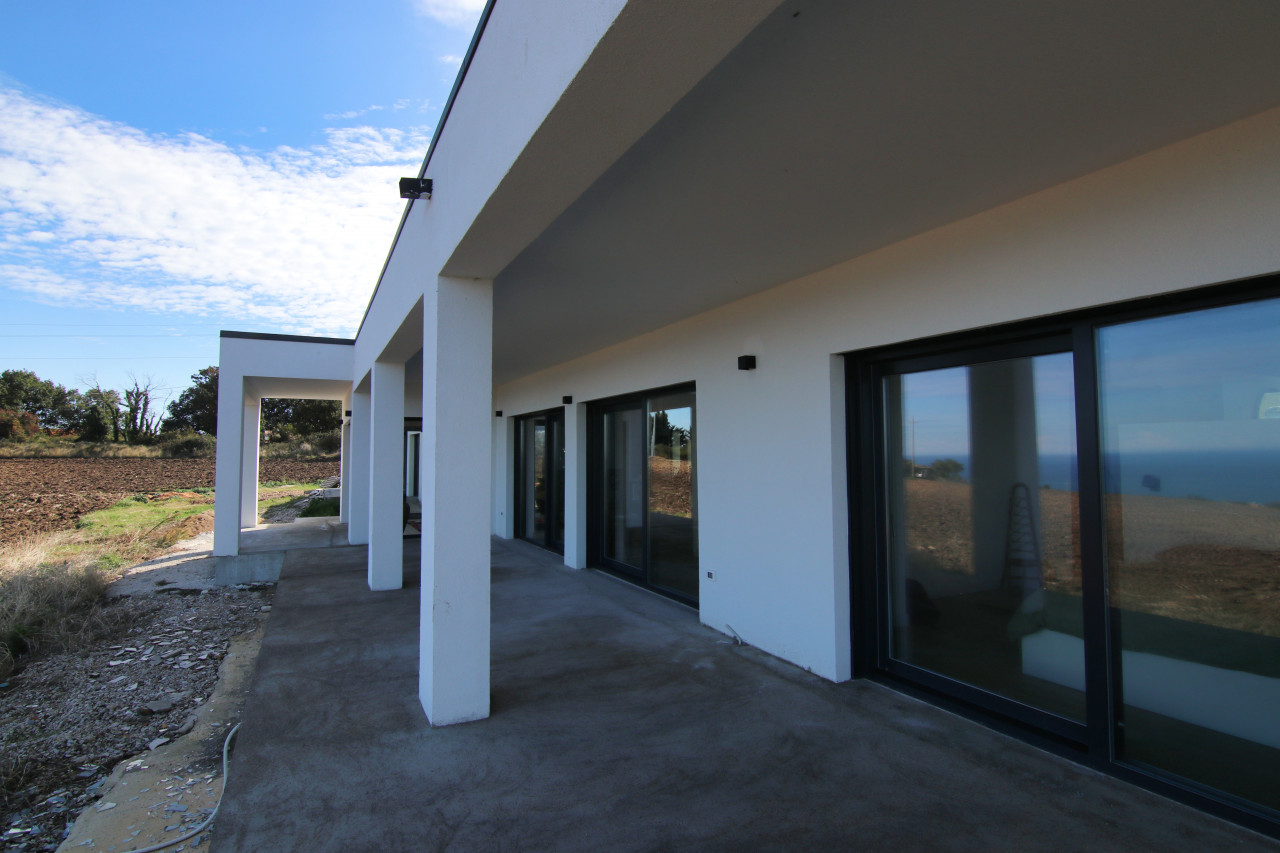
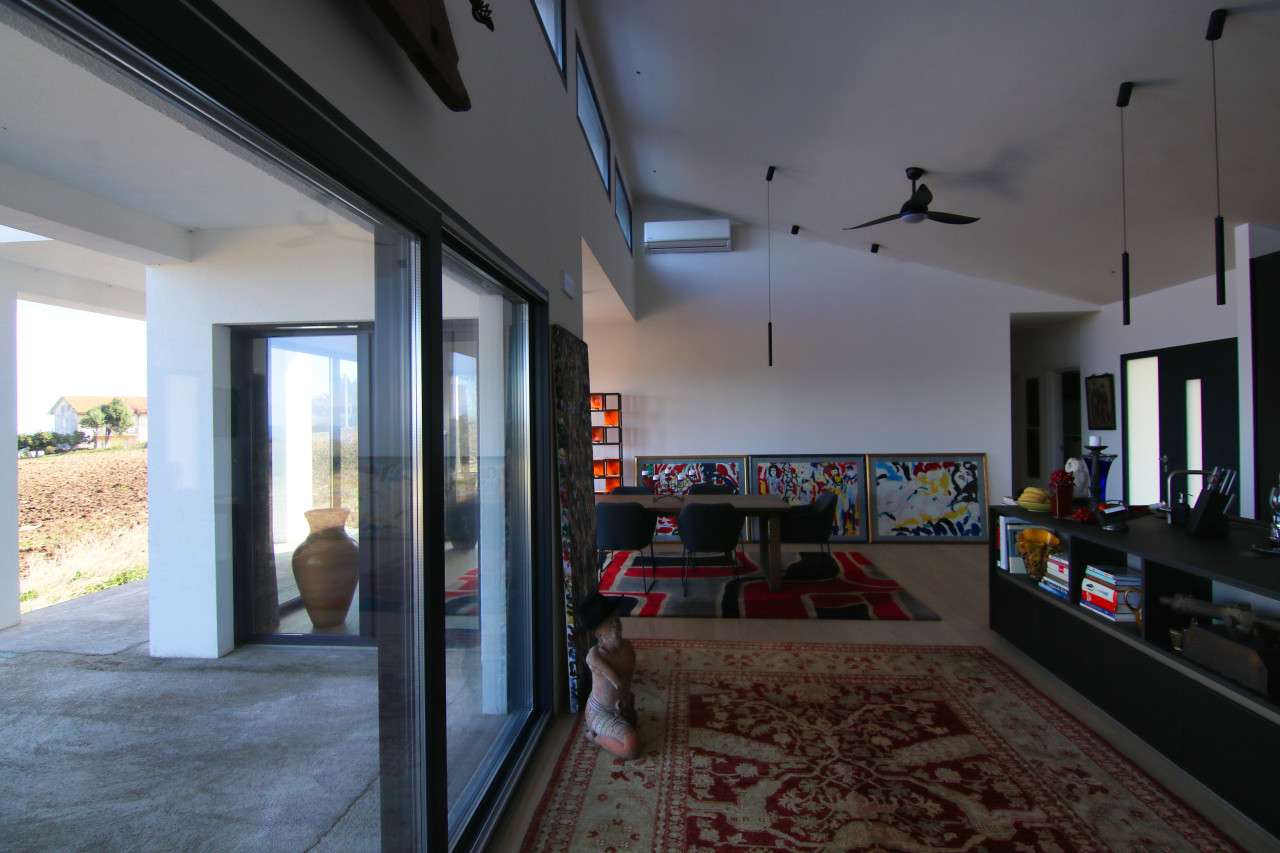
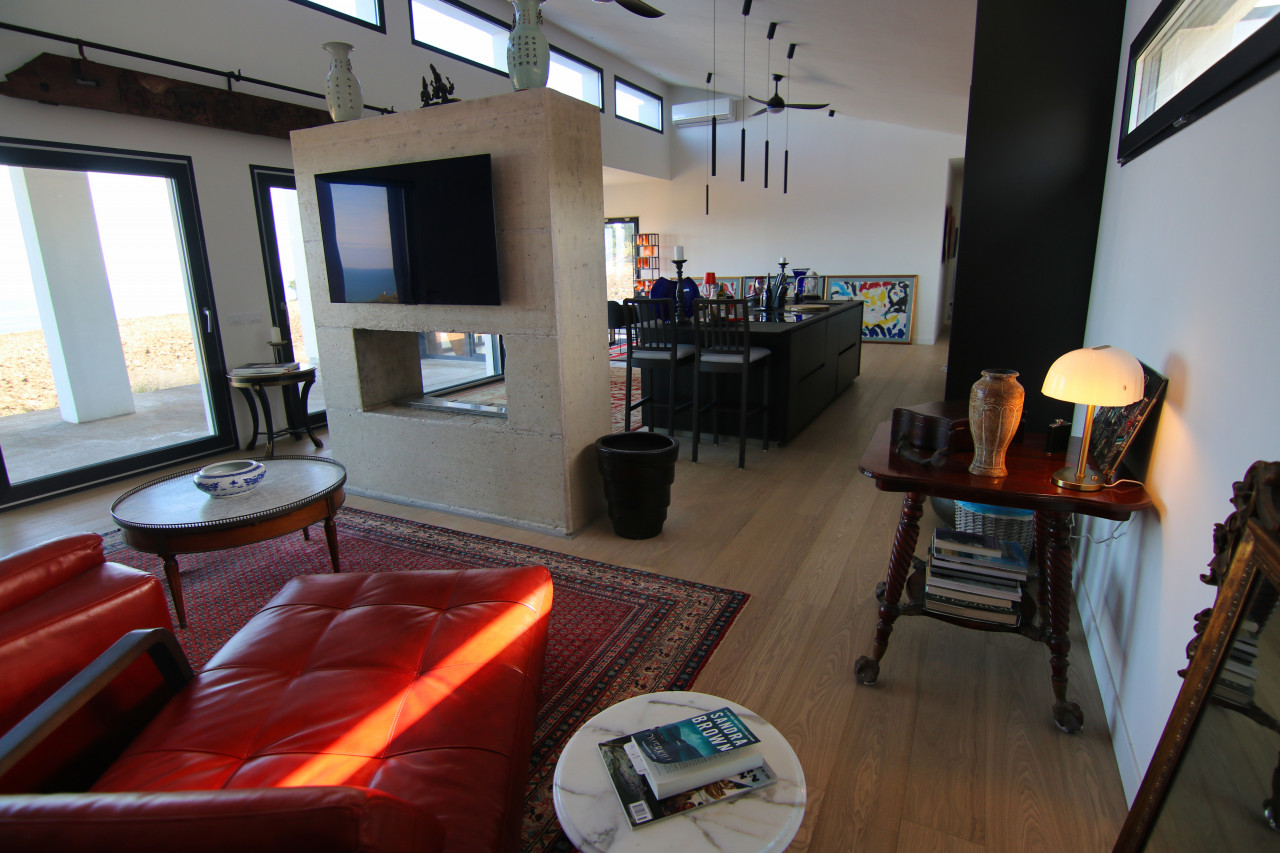
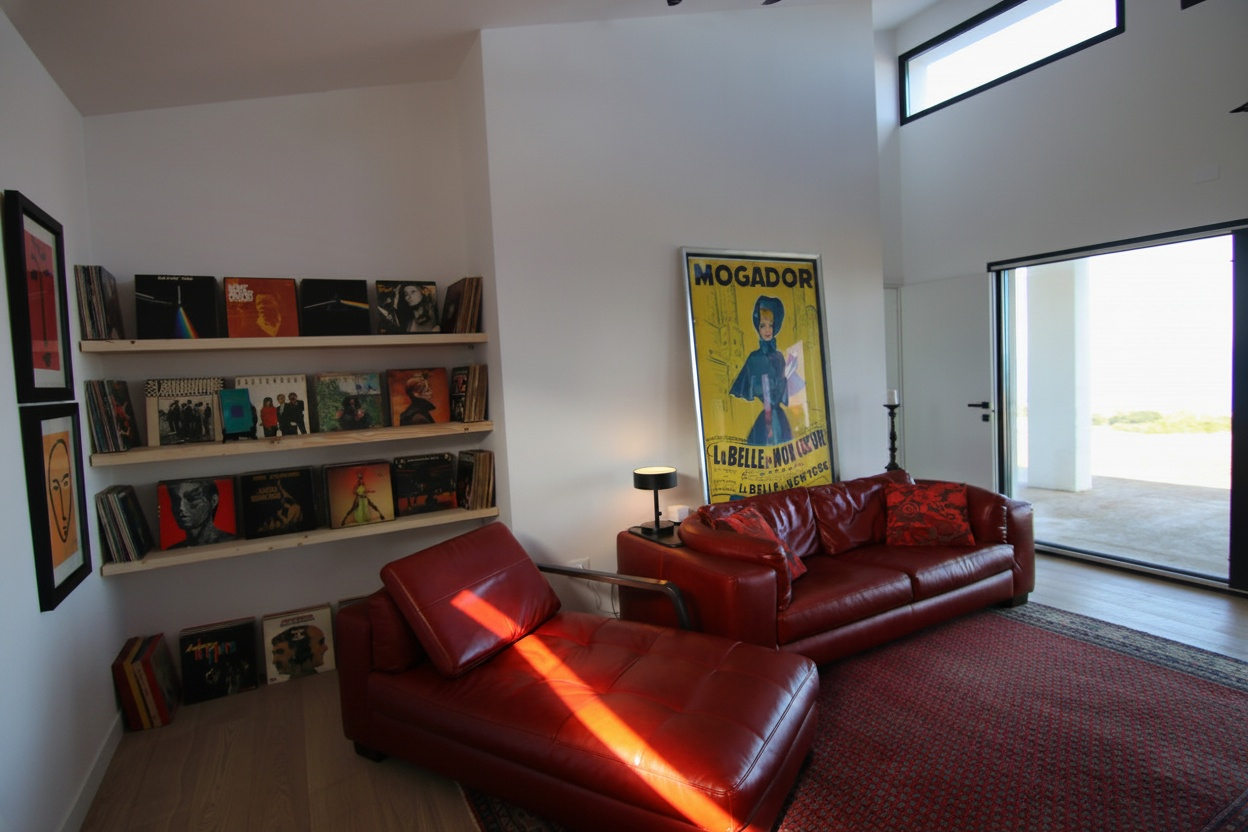
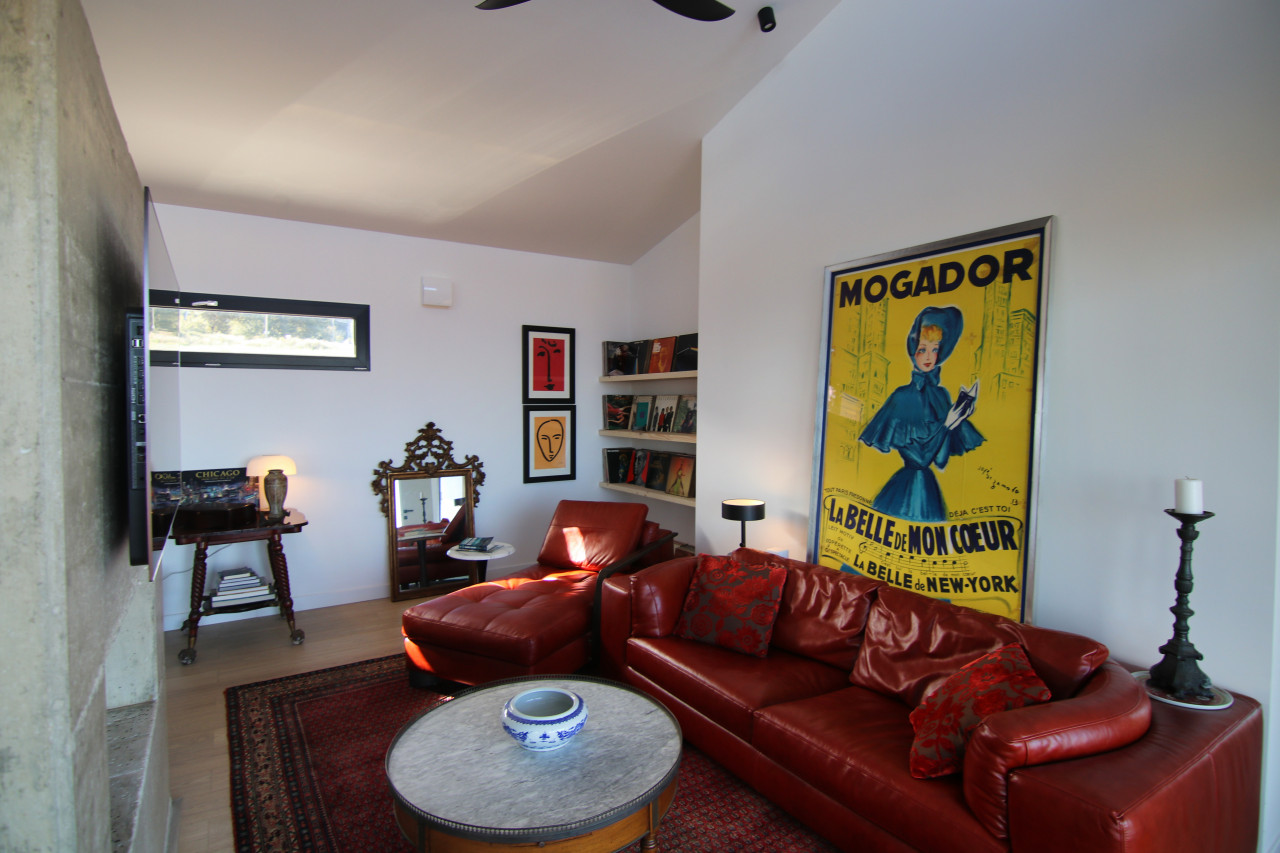
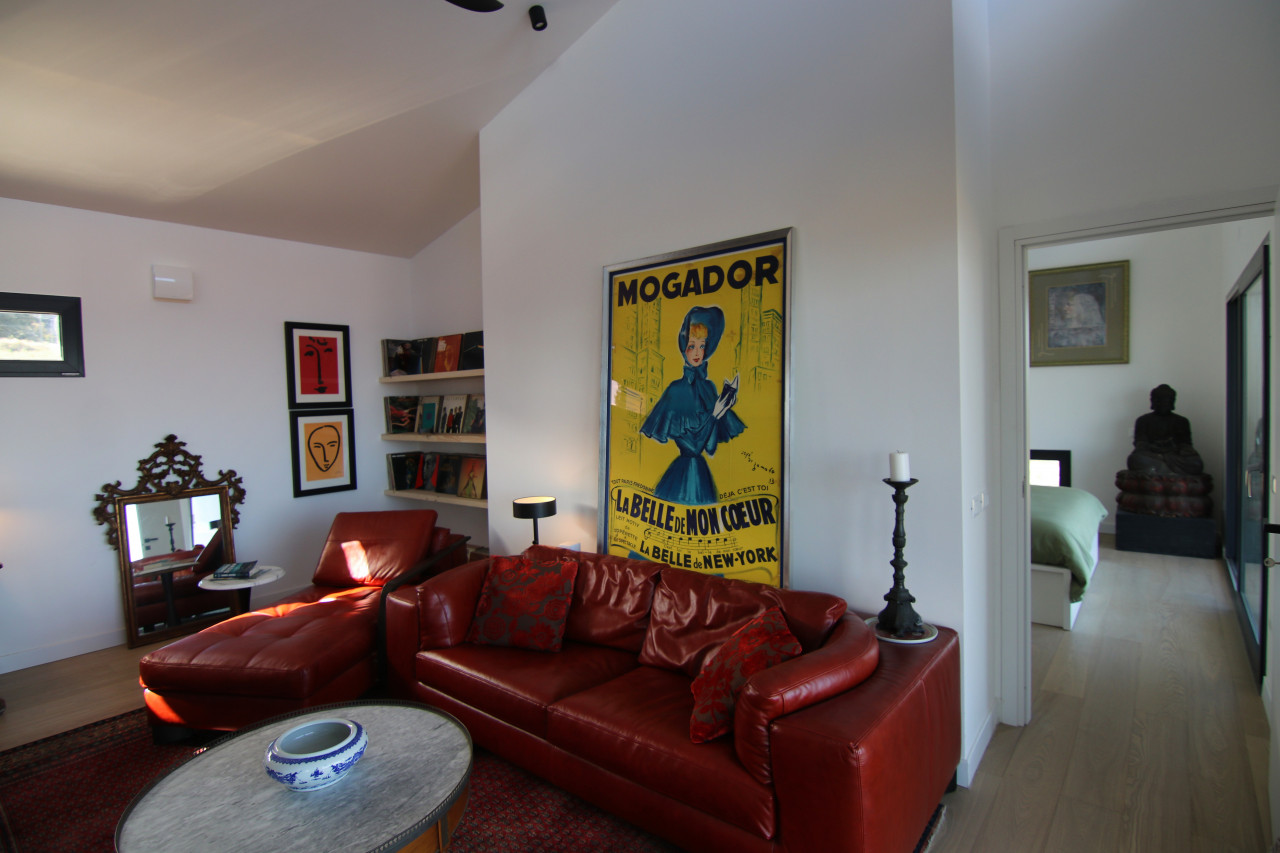
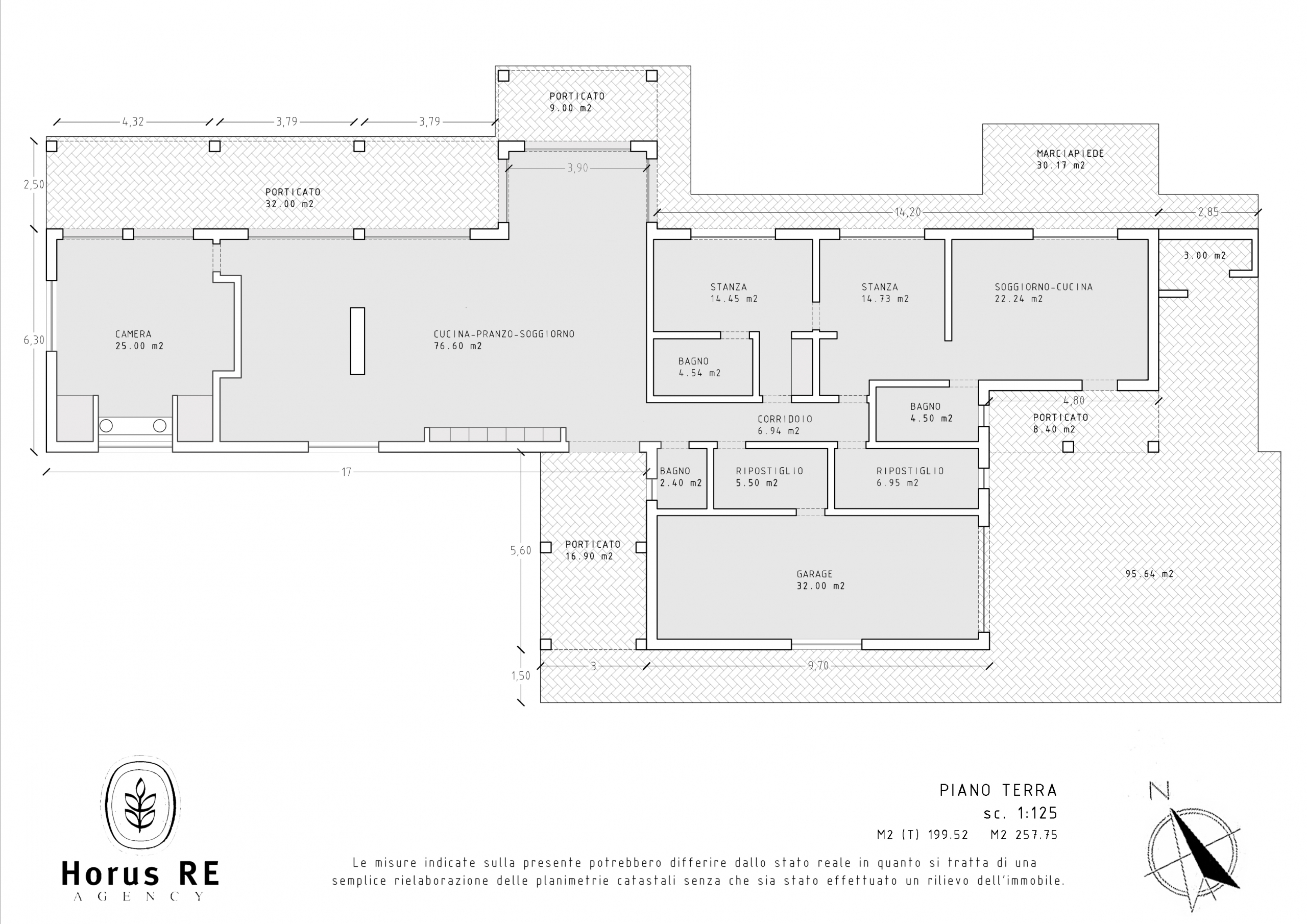
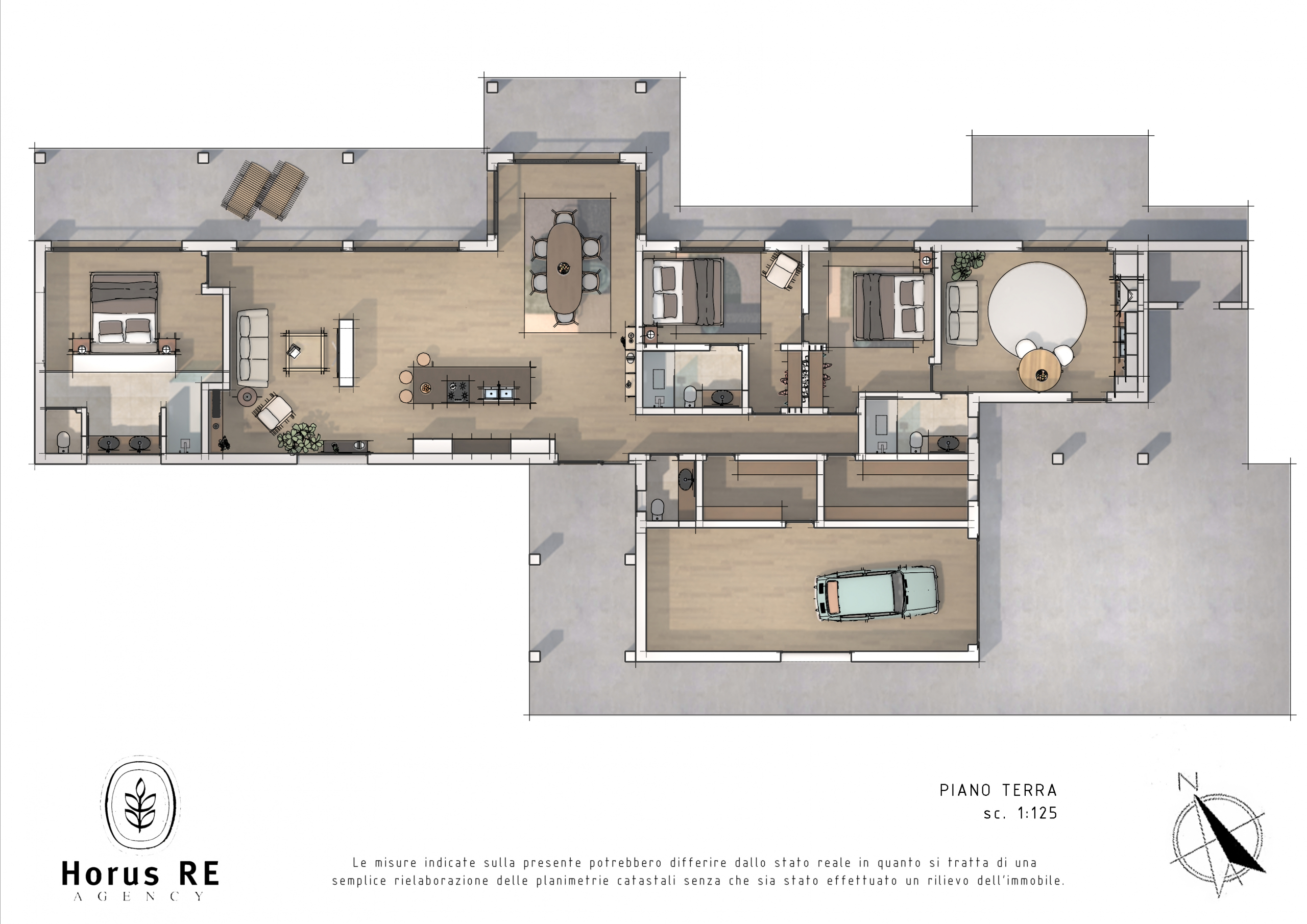
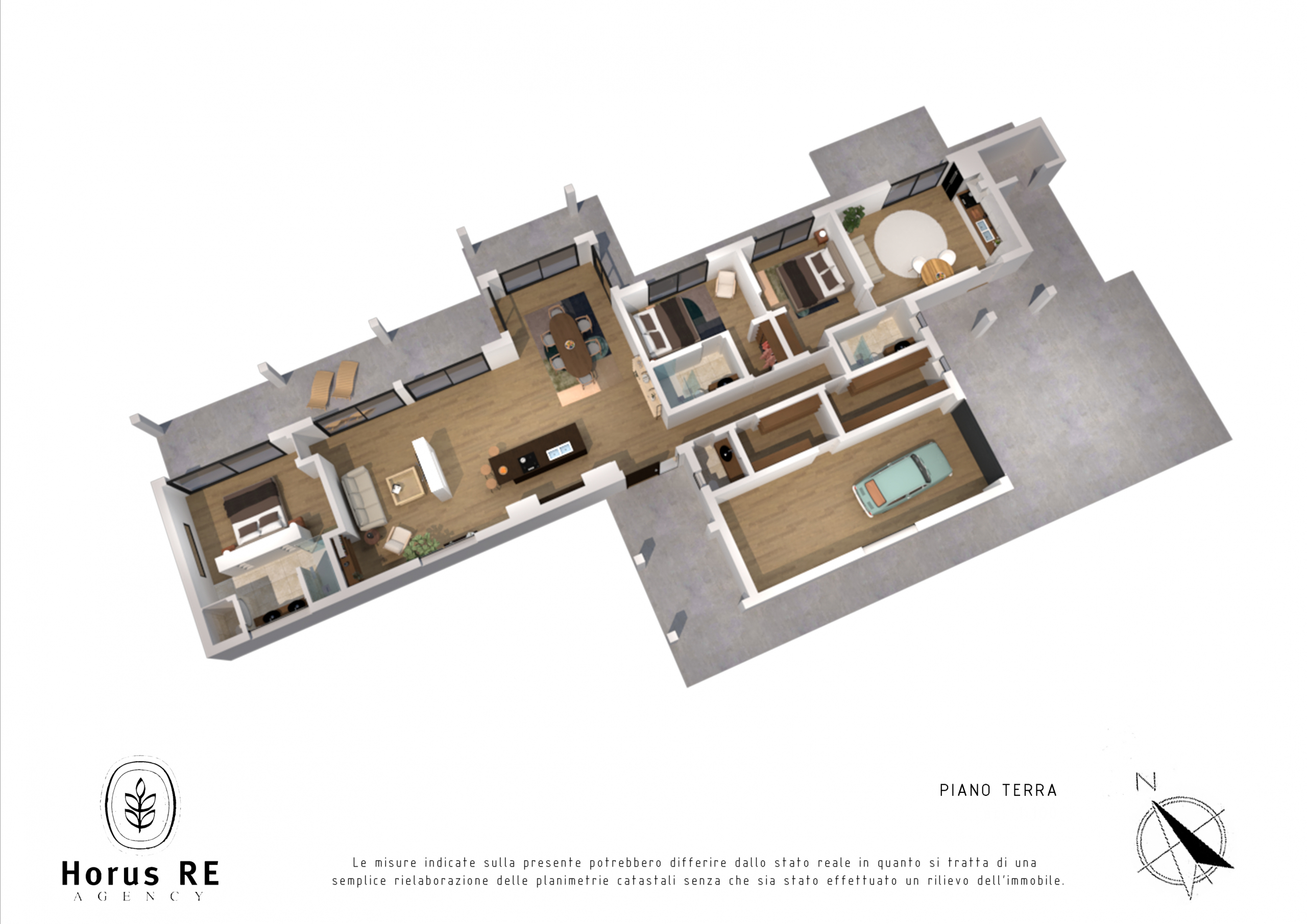
The interiors are new, crisp, and shaped by a kind of quiet “feng shui,” faithful to a simple and deliberate order. Split-system cooling, ceiling fans, suspended bathrooms and large glass shower boxes speak a contemporary, practical language, letting empty space carry much of the atmosphere. A first dépendance — with living room and kitchen, double bedroom and bathroom — opens directly onto the sea-facing window, and like all the other rooms, it looks outward. Every space has direct access to the exterior, as if the house refused the idea of closing itself, preferring instead to let the hill enter with its wind and light.
A long corridor, almost a small gallery, leads to the second double bedroom. This one also faces the garden and the sea, and has its own private bathroom. The third bedroom, the master, is located in the section where the building gains height. Here the light feels freer; it enters from above and from the side, and the partially open bathroom blends into the room without breaking its lines. The result is a quiet, almost meditative space, where minimalism becomes a kind of breathing.
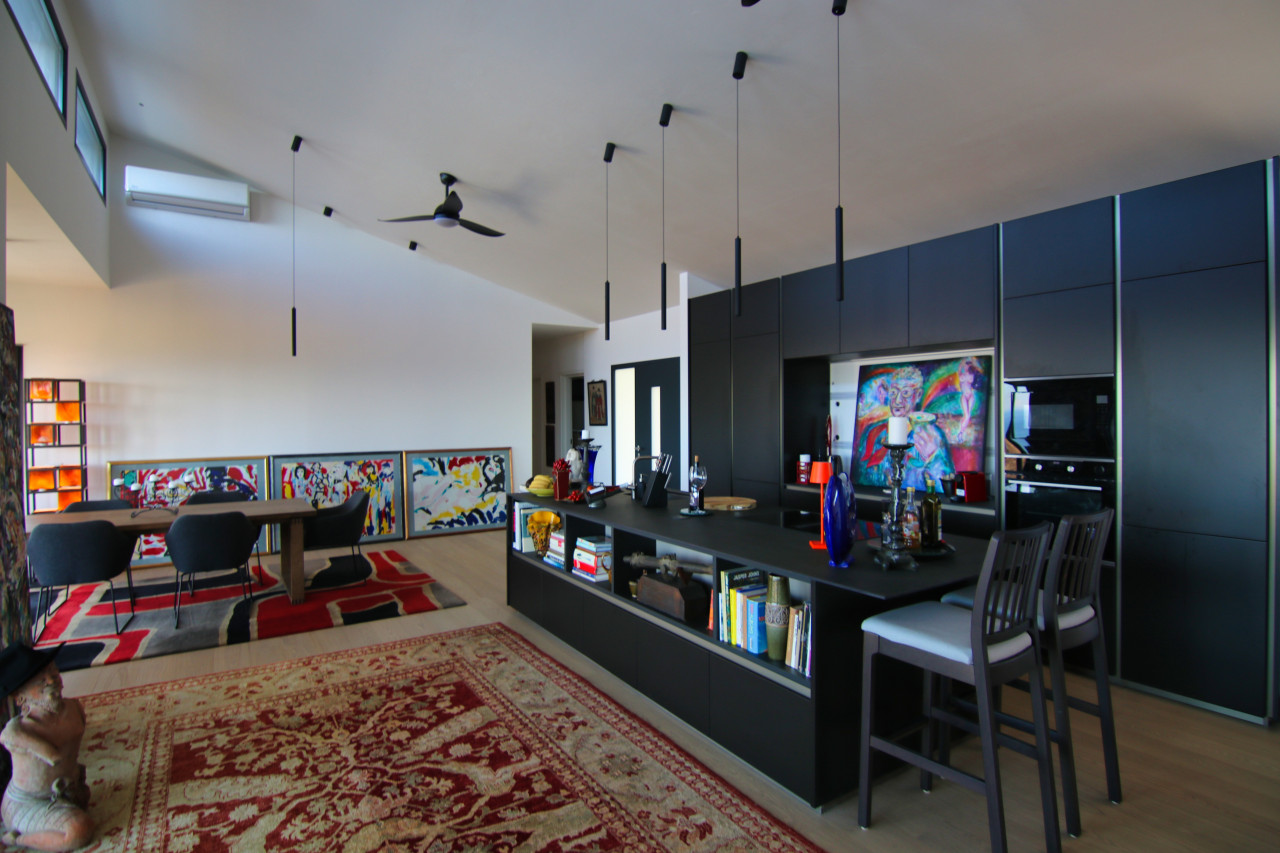
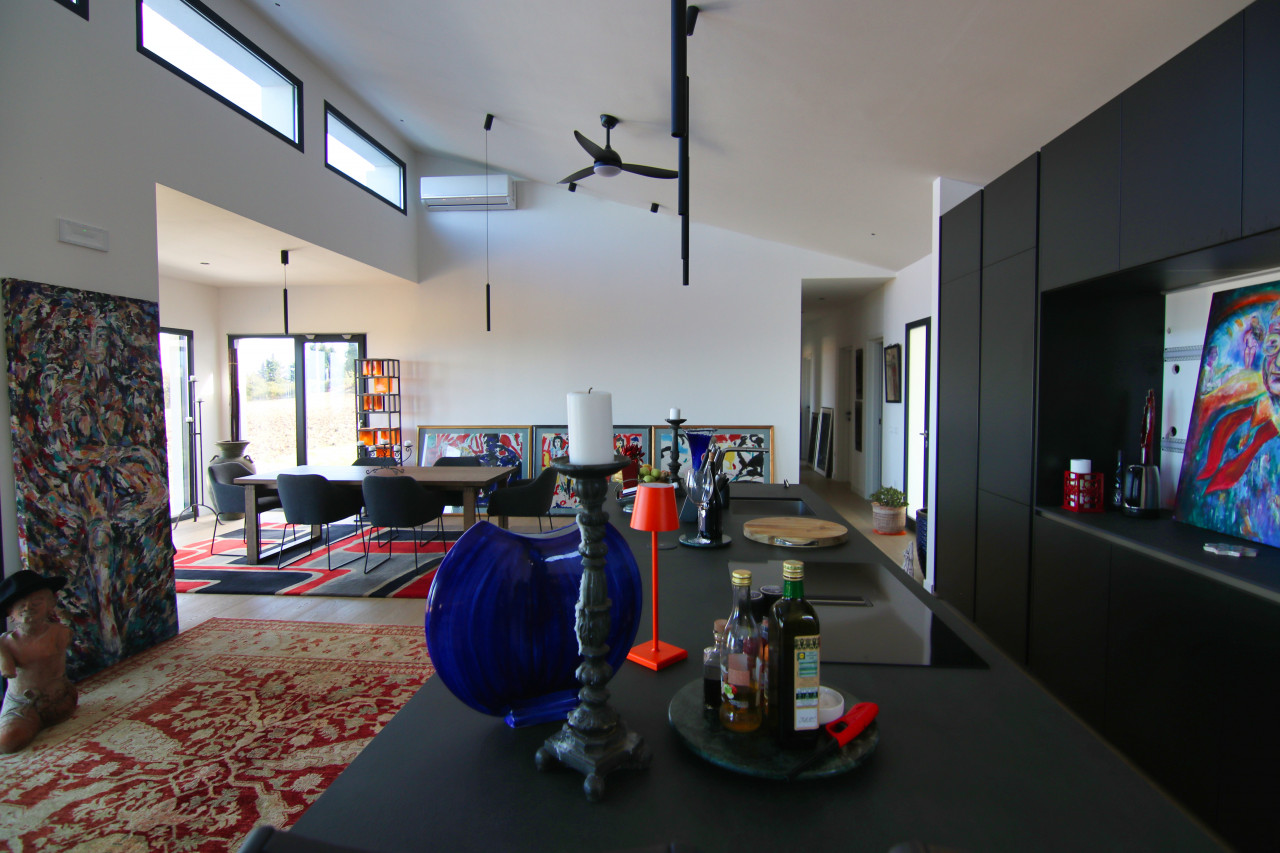
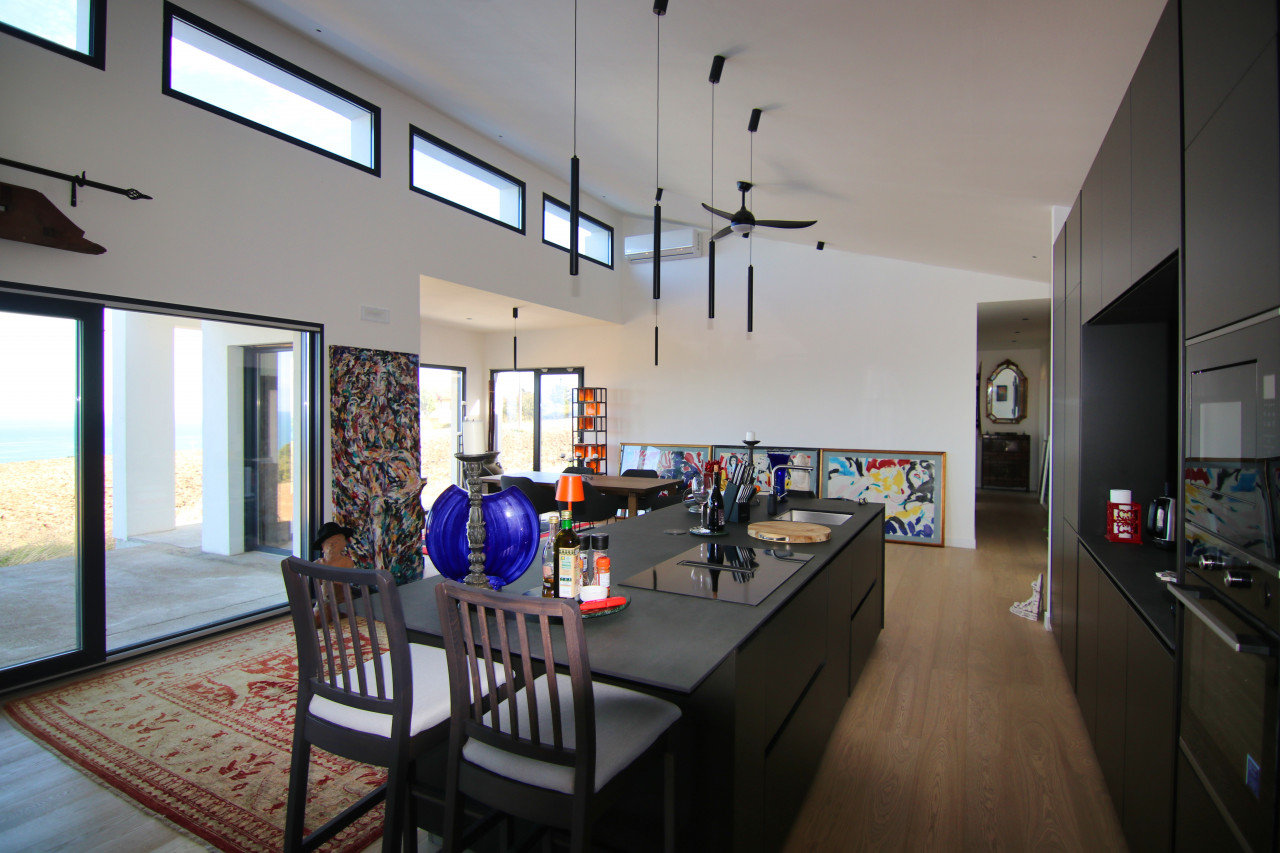
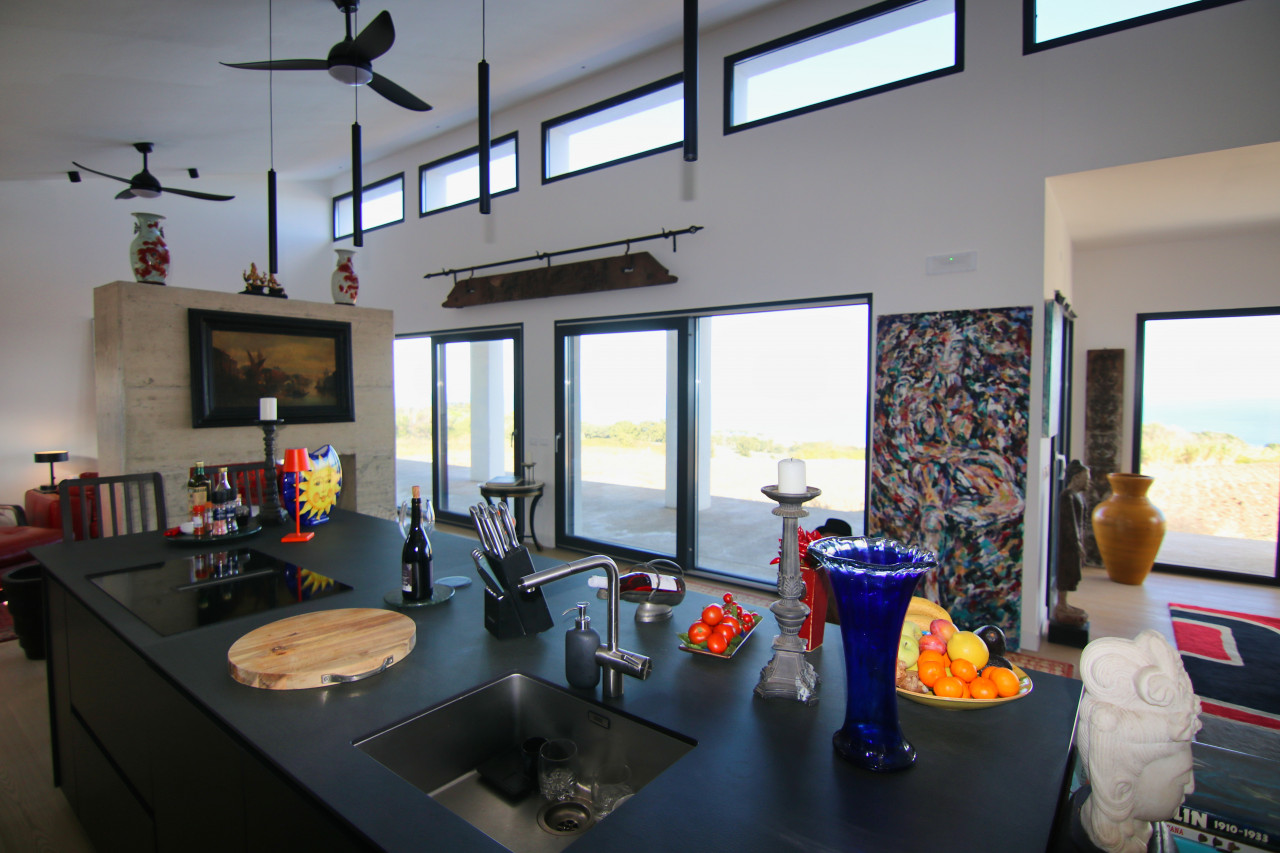
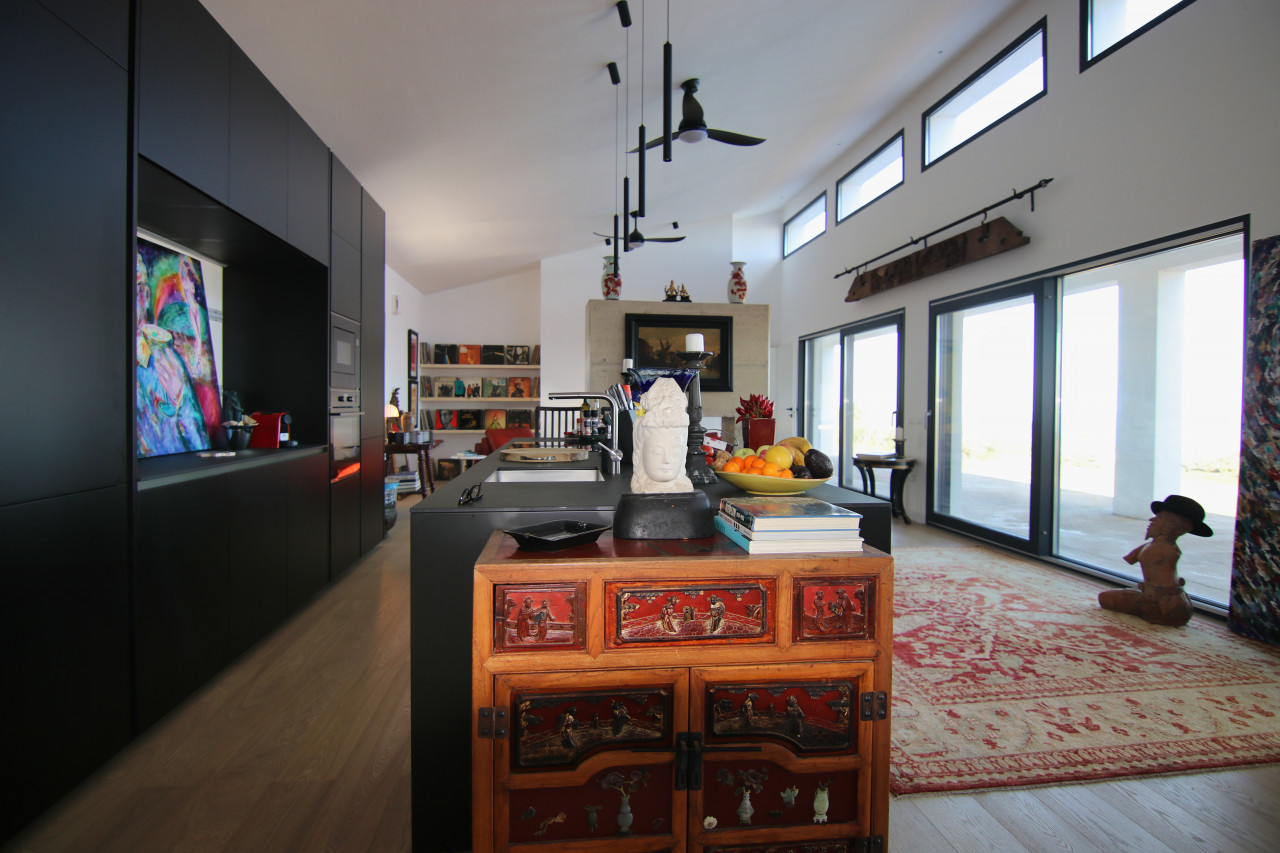
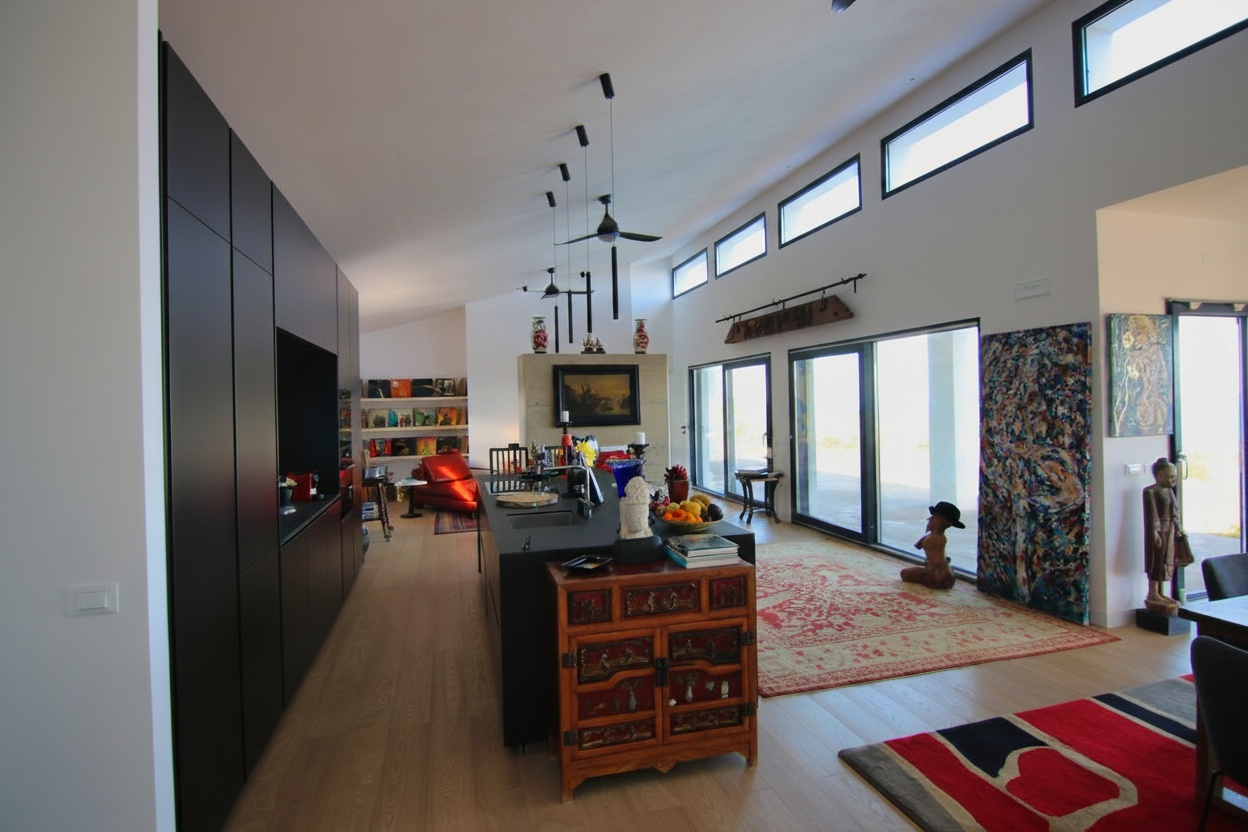
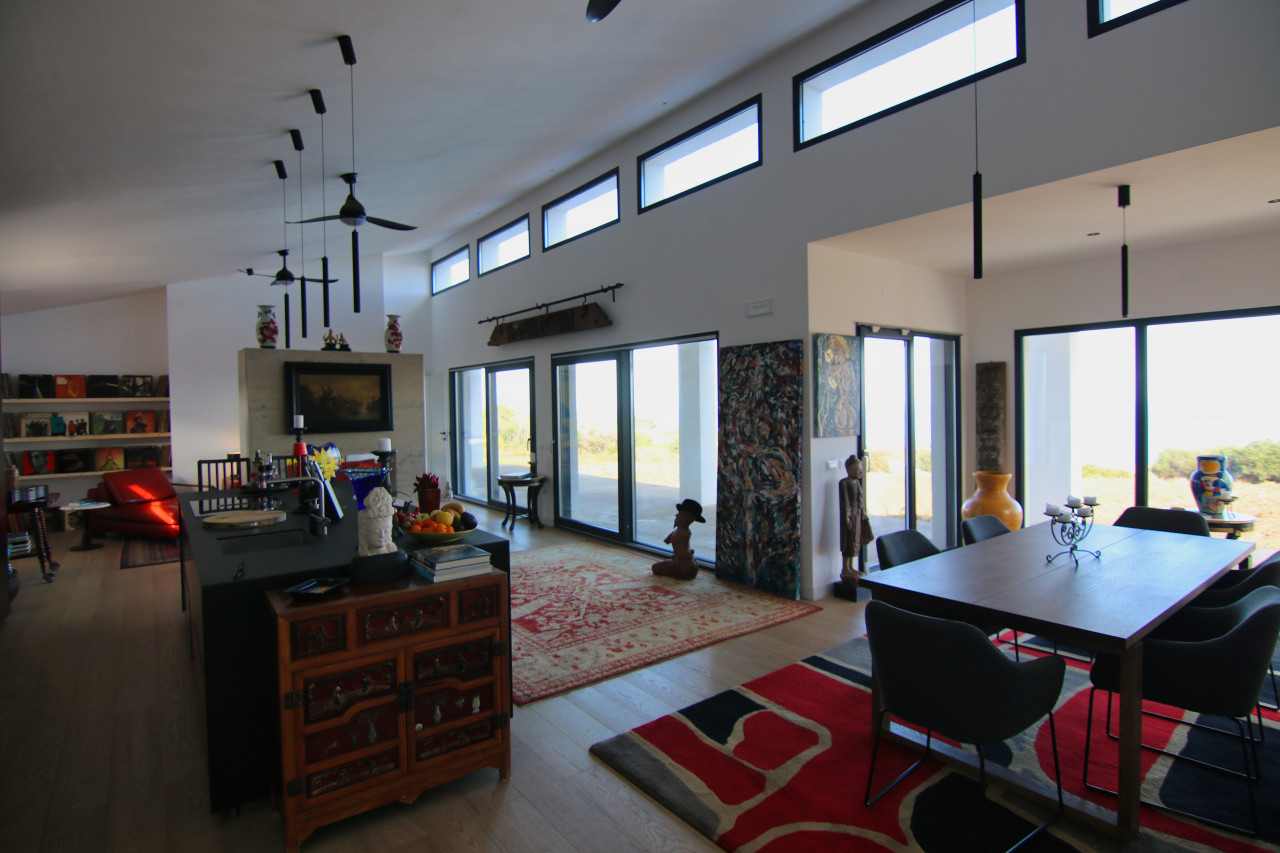
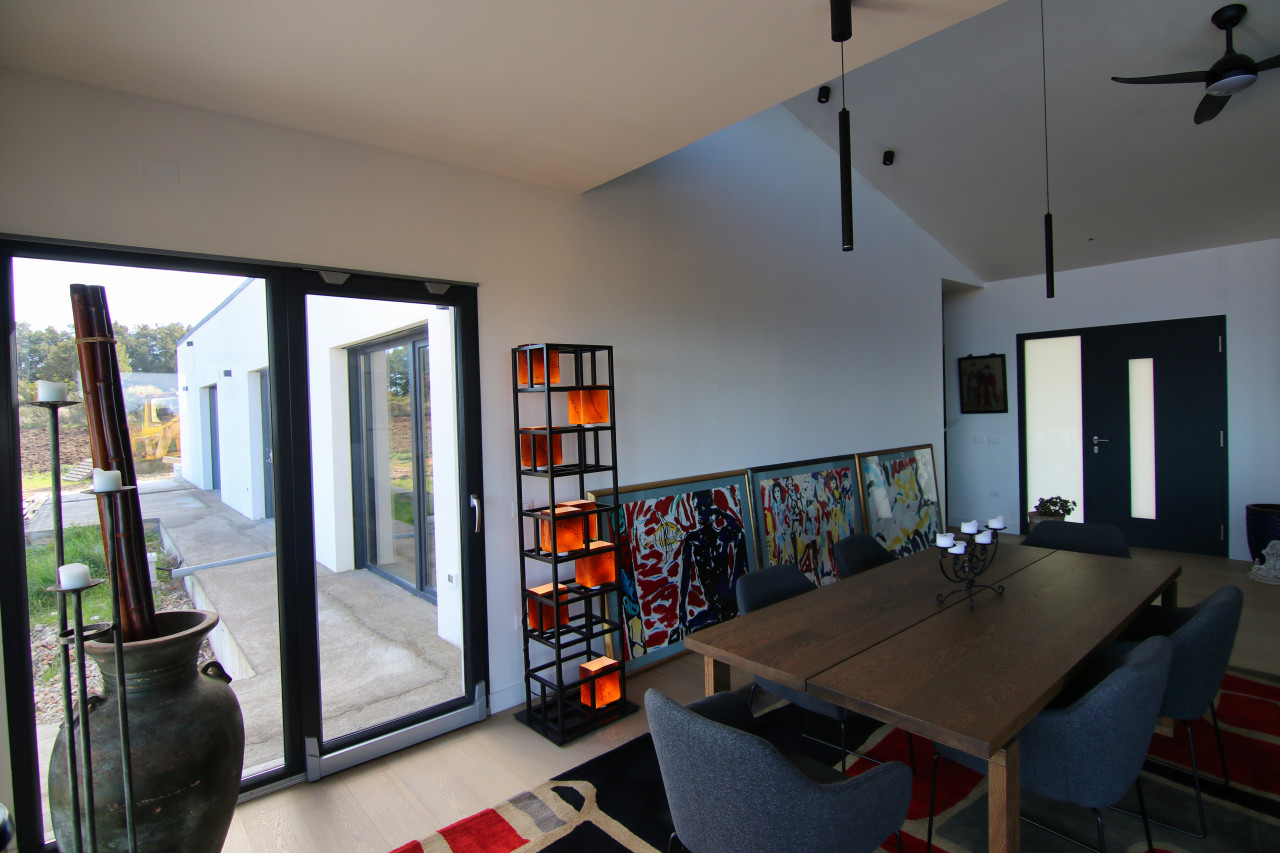
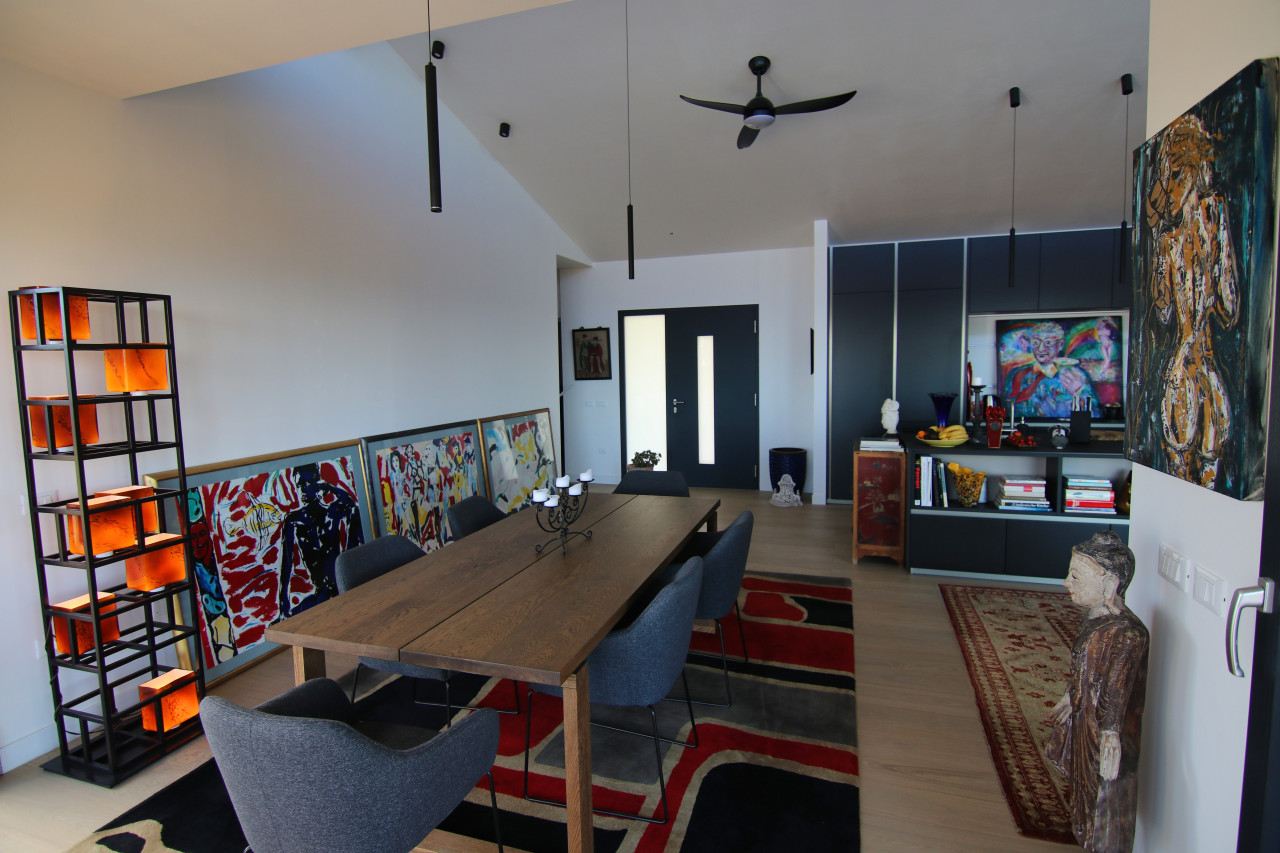
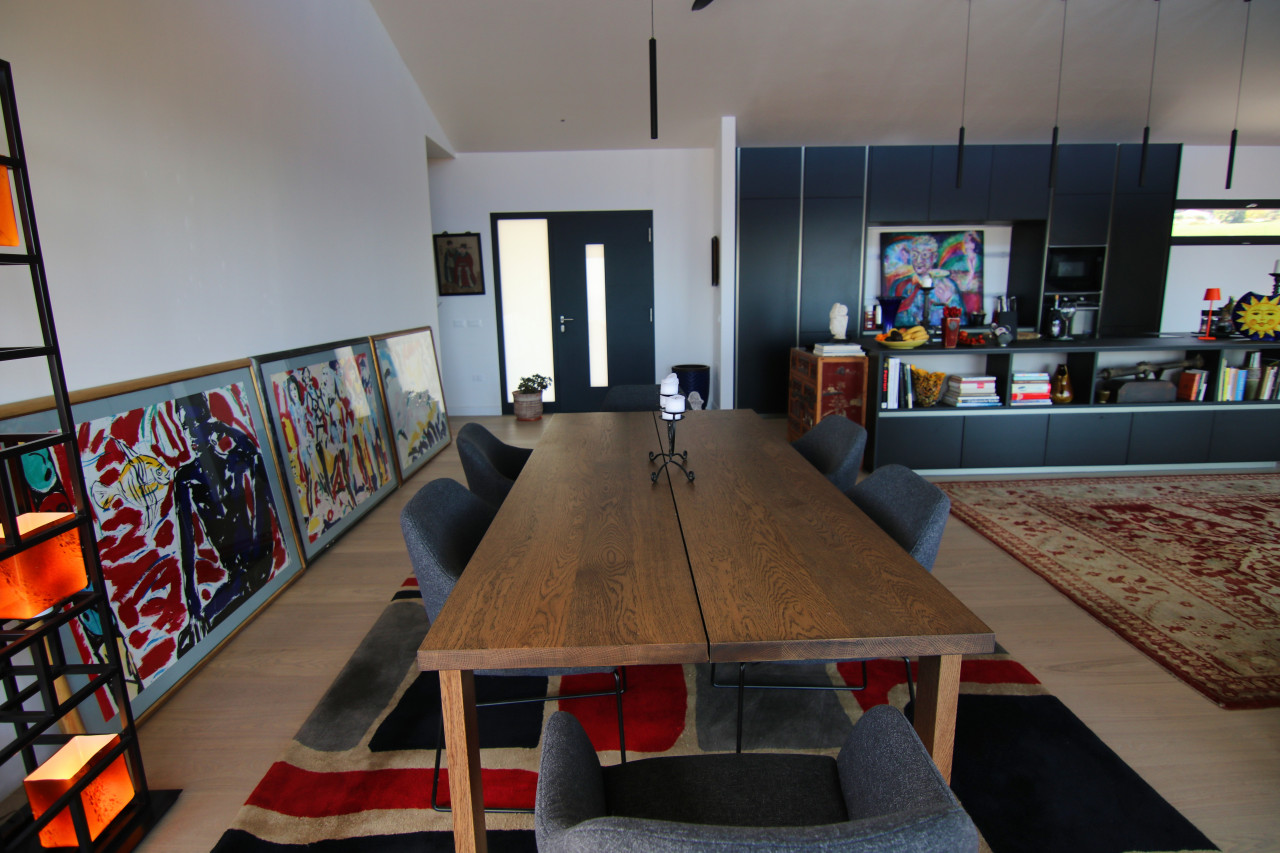
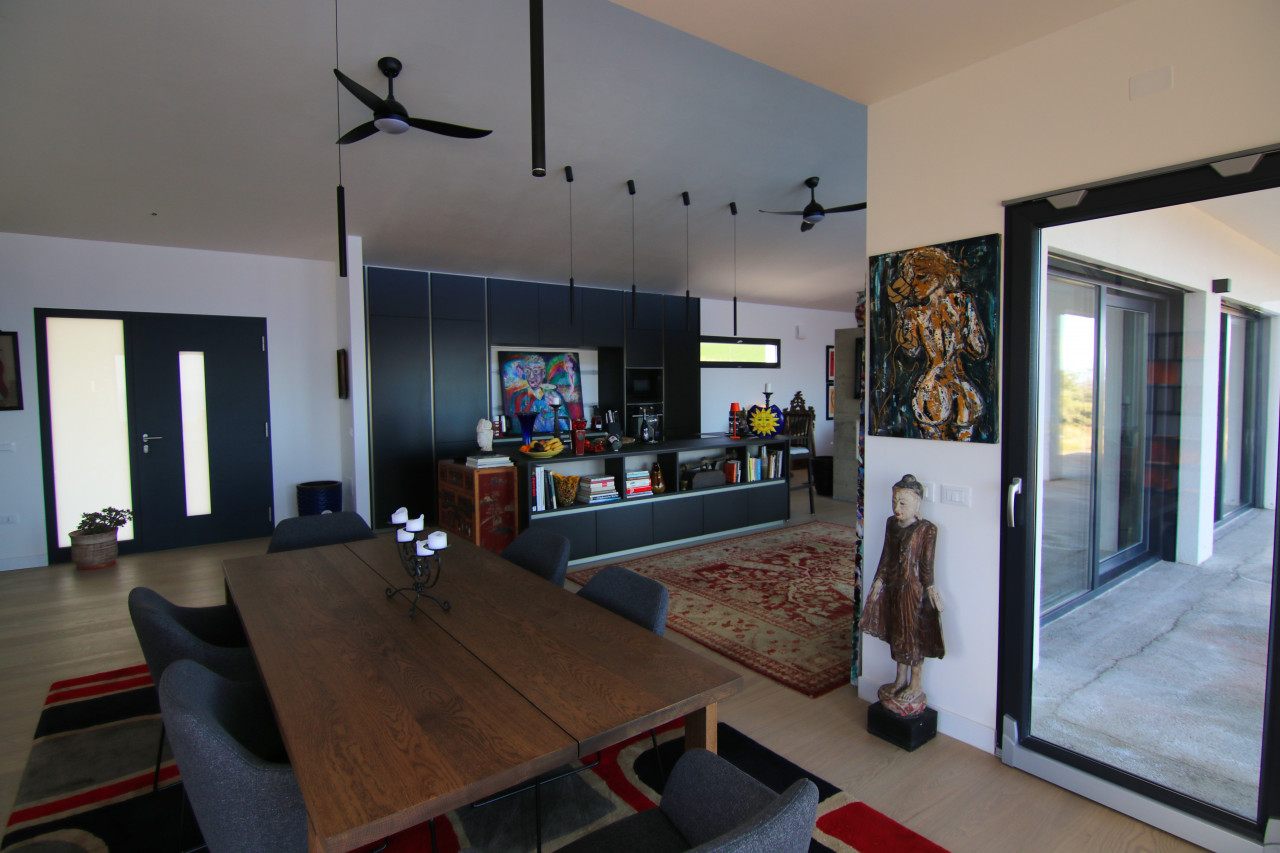
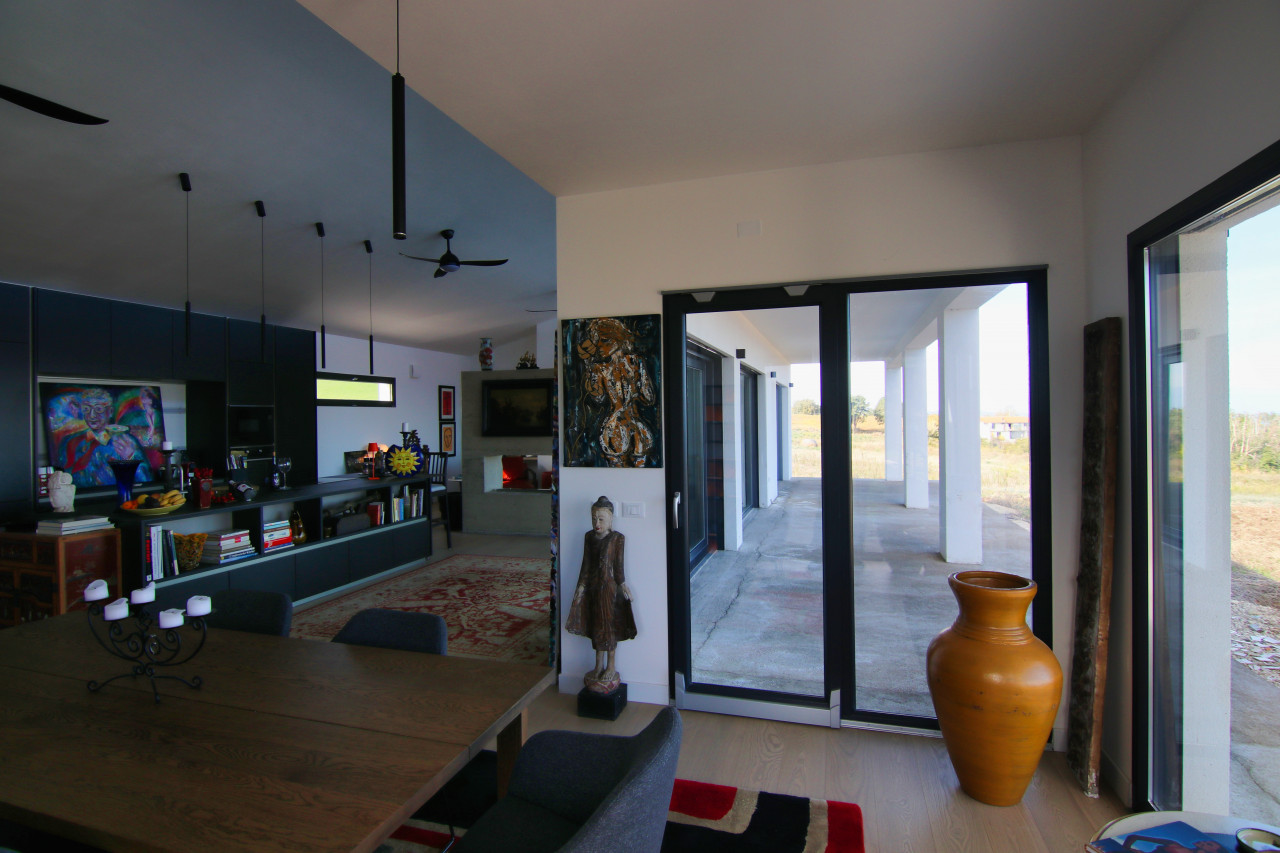
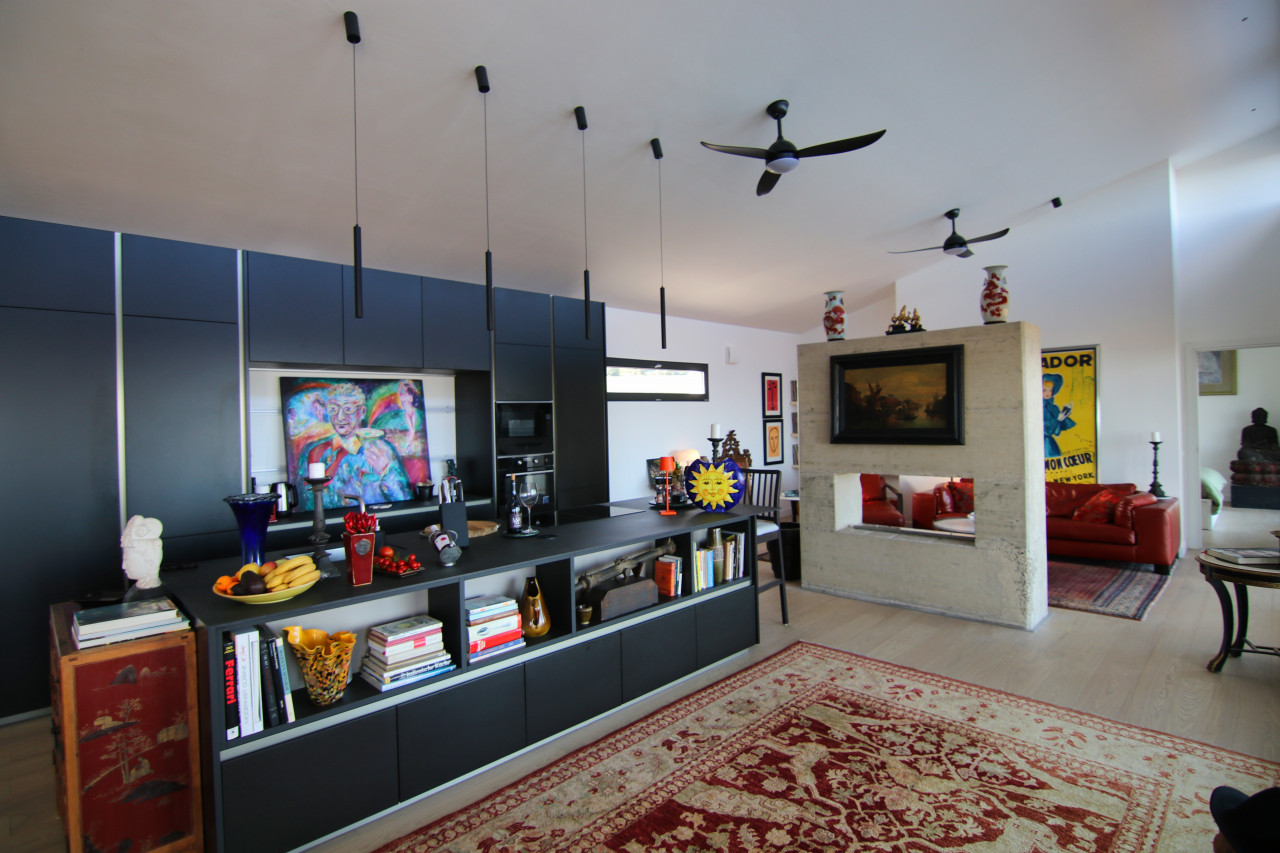
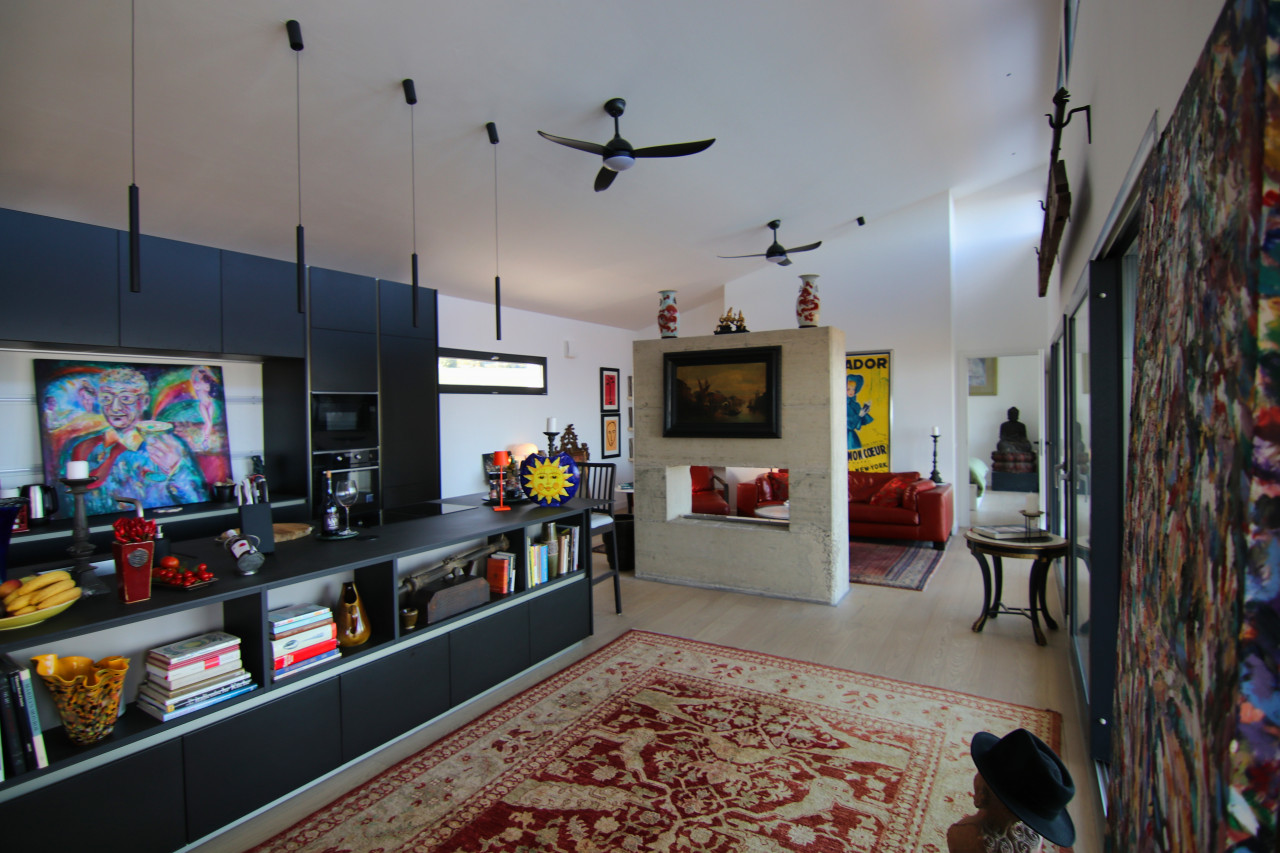
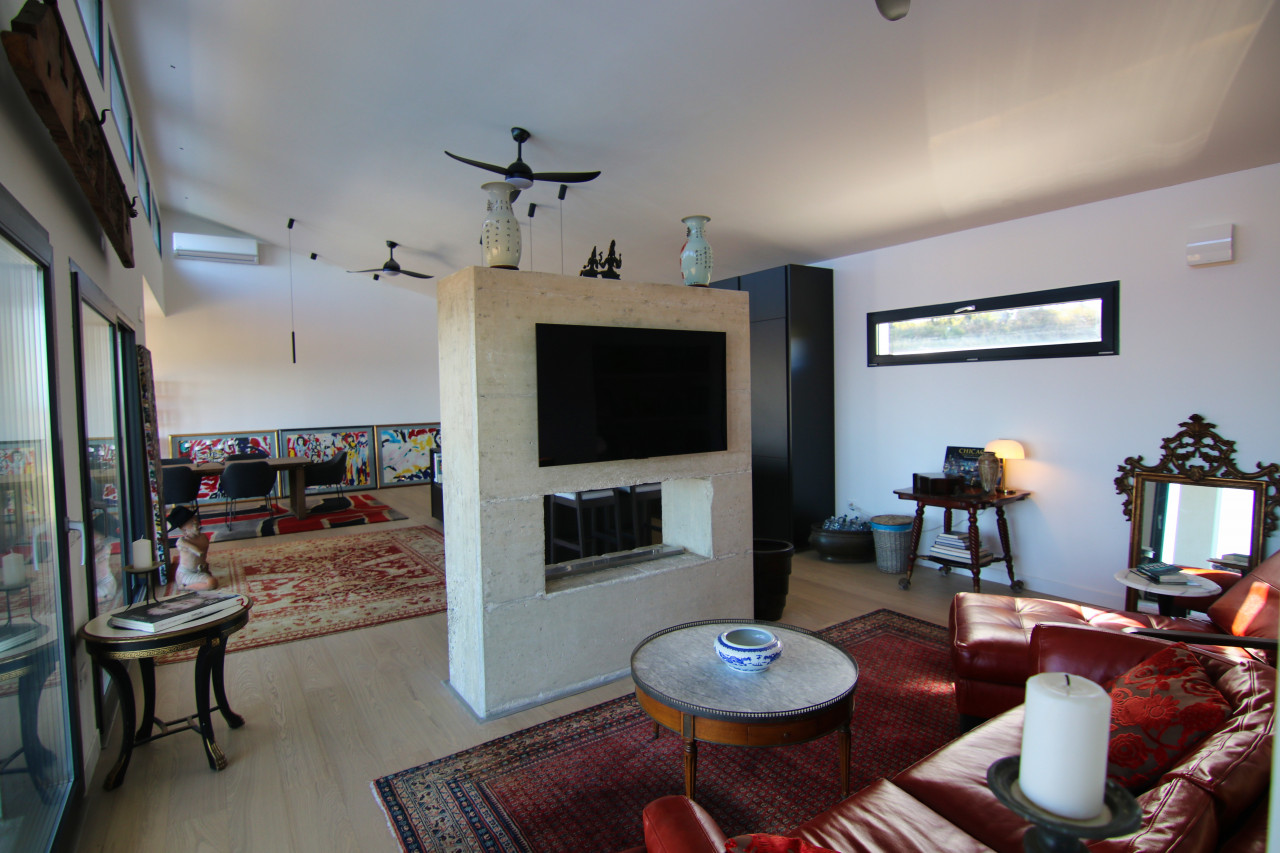
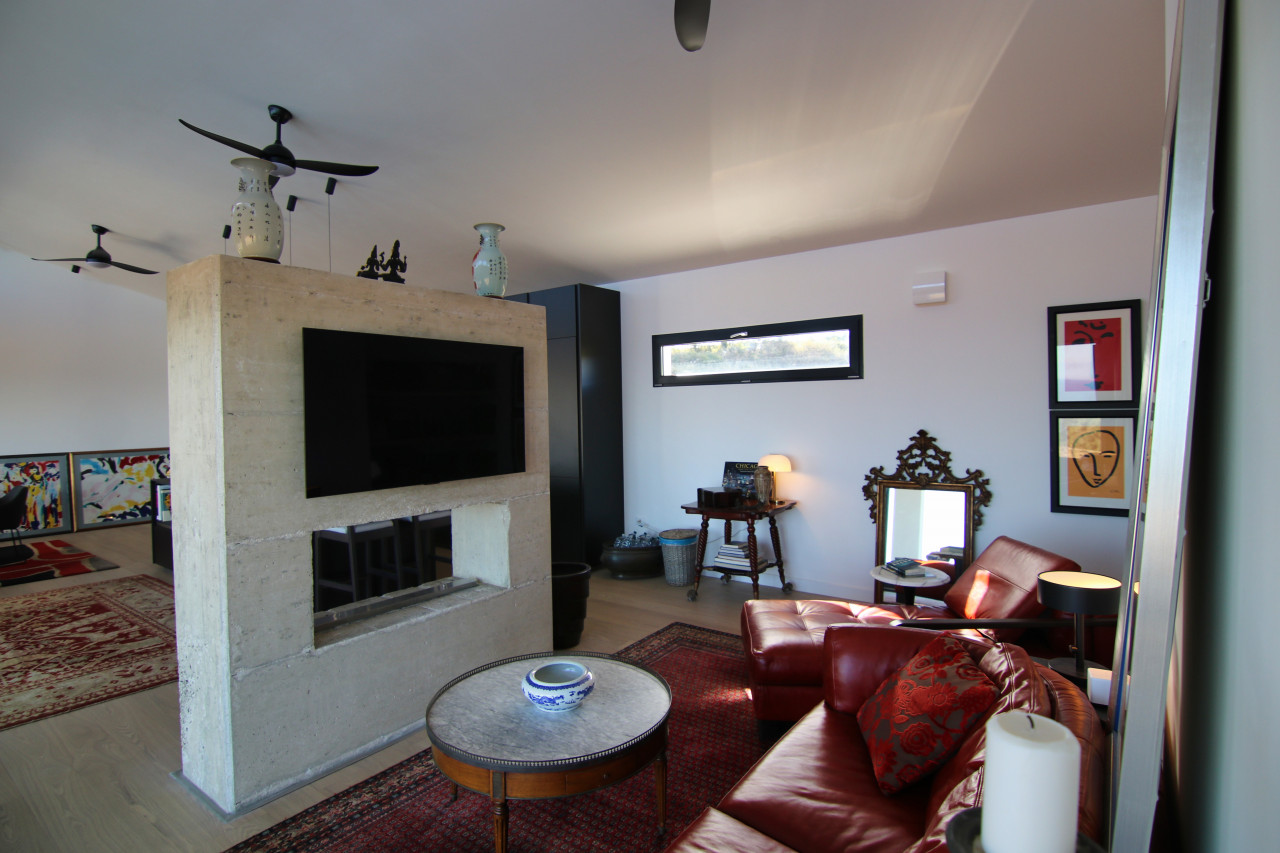
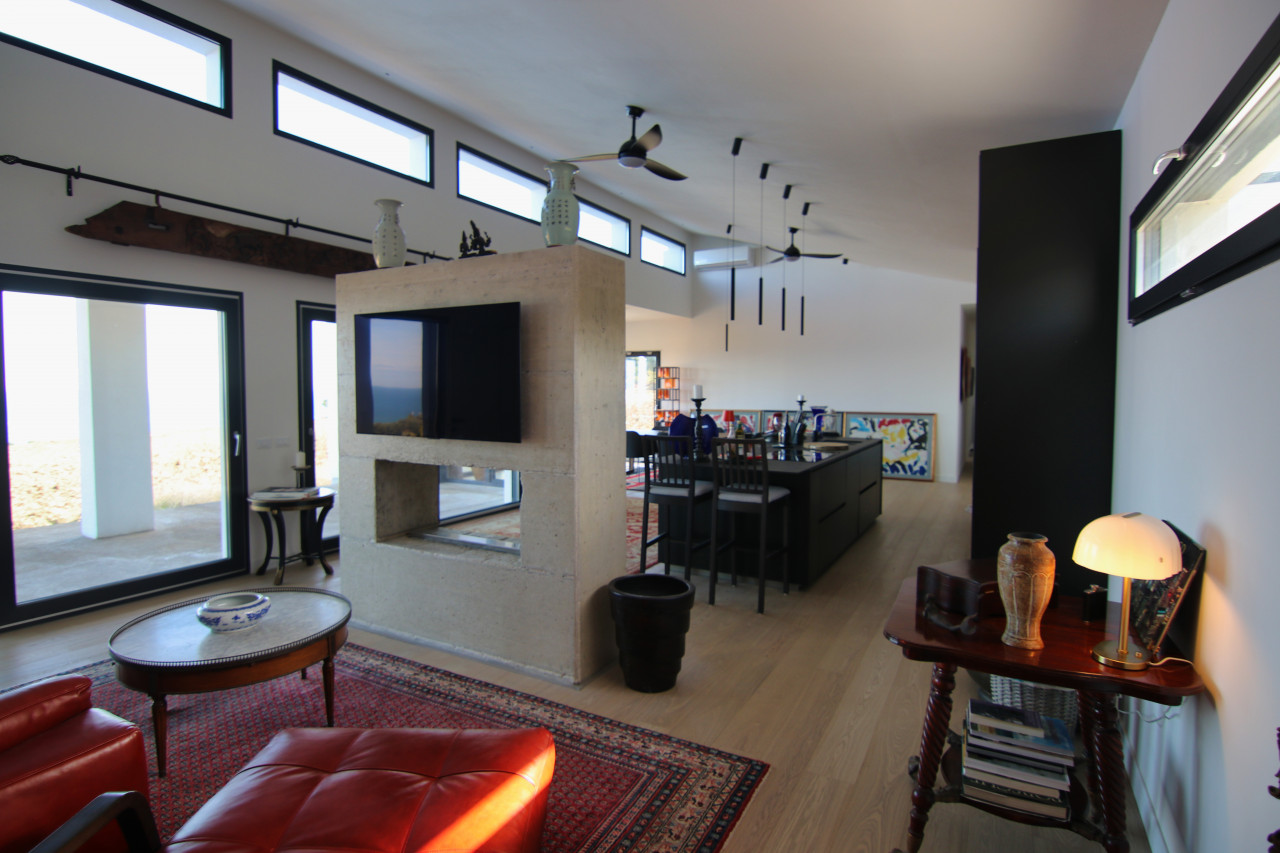
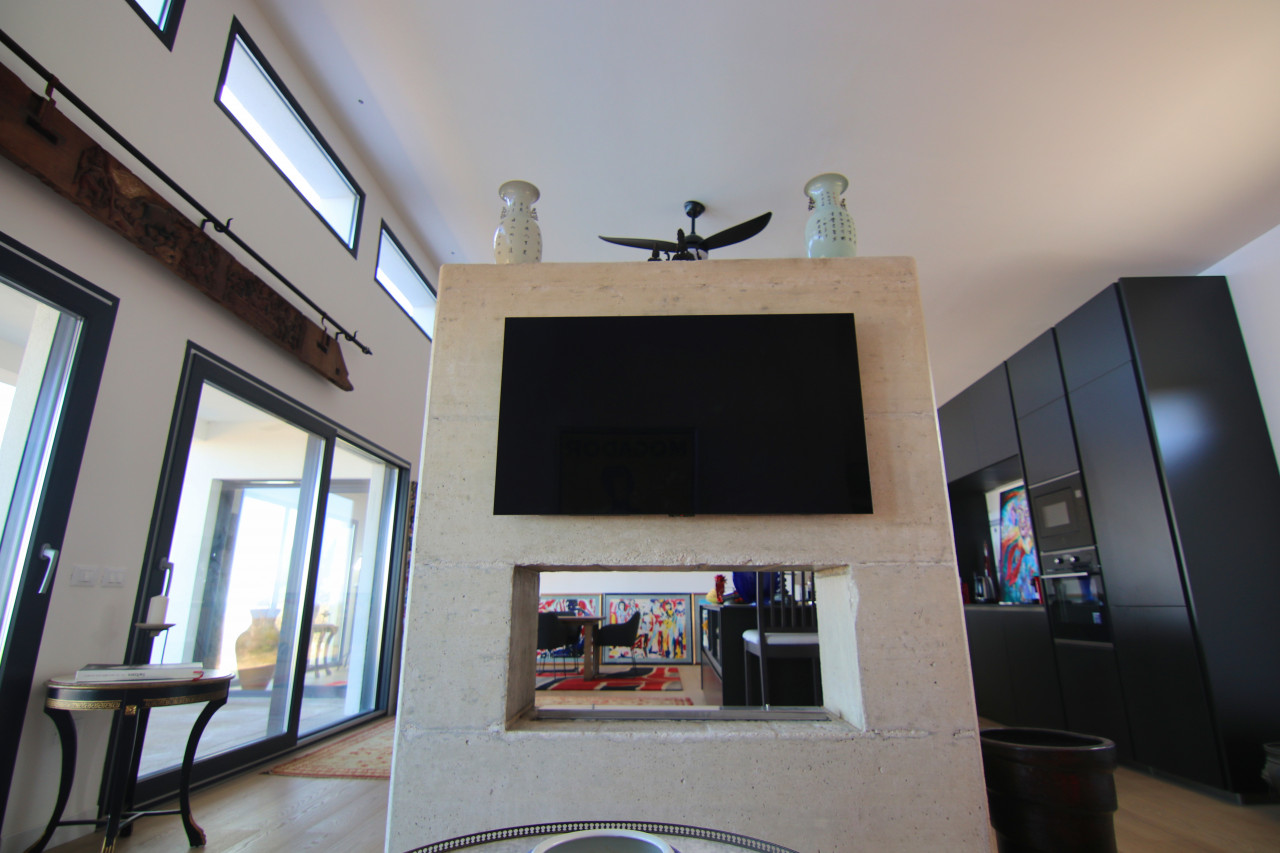
The heart of the villa is the large central living area. Around it, the architecture leaves room for the light to shape the environment and for the volumes to speak on their own. The height, the suspended skylights and the great side window create a scene that asserts itself naturally. The kitchen, hidden within essential cabinetry that looks more like boiserie than storage, reveals a functional island and modern equipment. A kitchen that appears when needed and withdraws when the room itself becomes the protagonist.
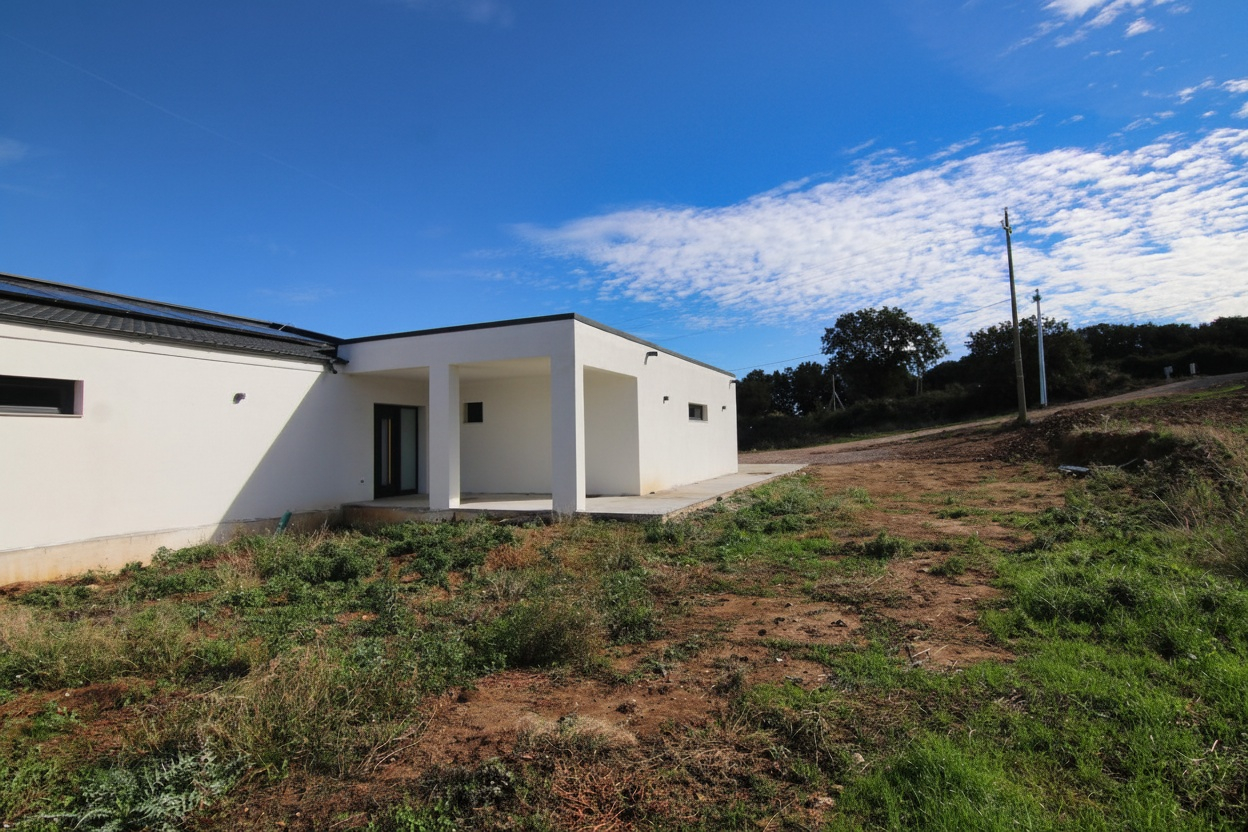
Beyond the living area lies the veranda, which in the mild seasons — far more generous here than elsewhere — becomes a natural extension of the interior. From there, the gaze slides toward the line of the sea, and the whole perception of the house shifts.
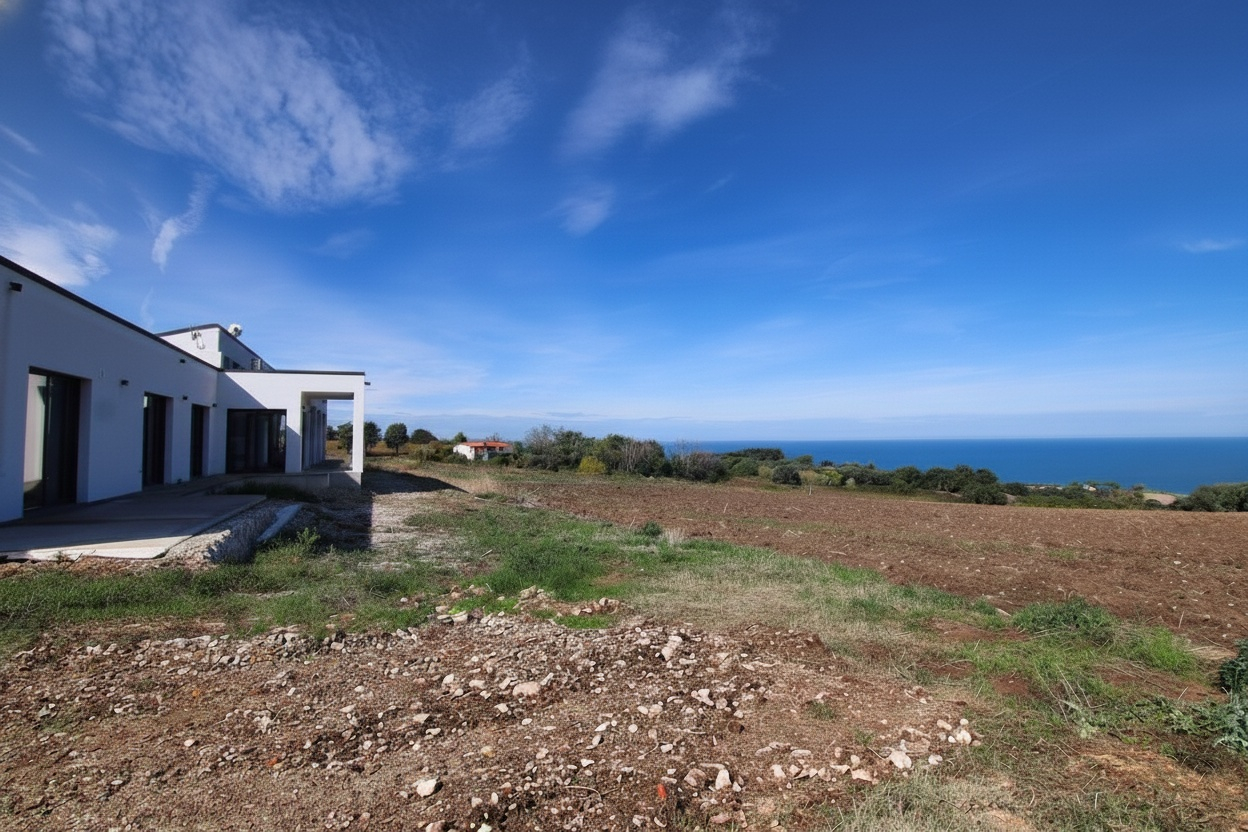
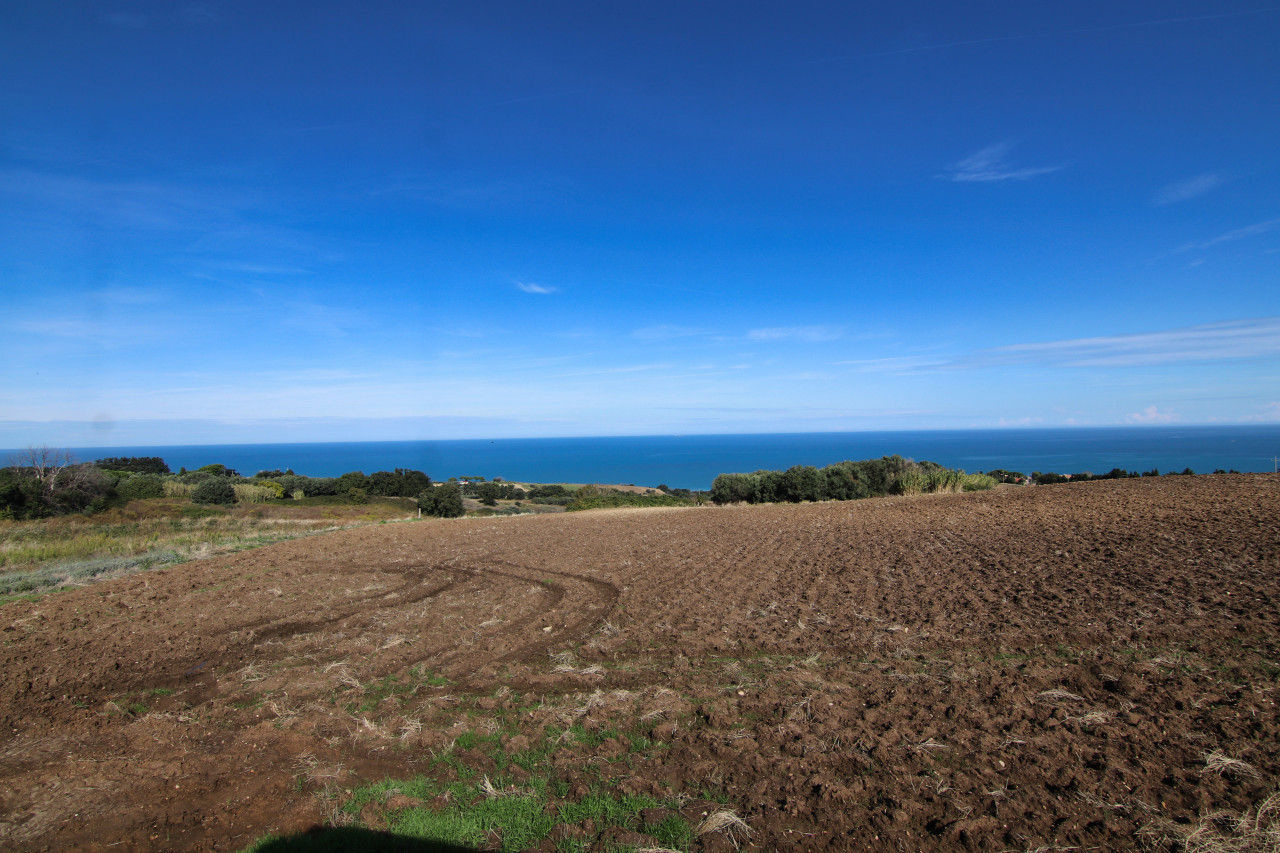
The land surrounding the villa is wide and still open to many possibilities. The swimming pool is currently under construction, and the rest of the garden awaits the vision of whoever will inhabit it: it could become an essential garden of shadows and stone, a small playground for children, or a simple, quiet monument to the landscape itself.
Taken as a whole, the villa is a clear shape on a hill that looks out over an unobstructed sea. It is unmistakably conceived as a structure that privileges light, space and a direct relationship with the landscape, guided by its own form of “zen.” A place that asks little, except to be lived slowly, because everything here — from the volumes to the great window, from the shadows to the veranda — seems to invite a more patient, present, subjective way of inhabiting the world.
The interiors are new, crisp, and shaped by a kind of quiet “feng shui,” faithful to a simple and deliberate order. Split-system cooling, ceiling fans, suspended bathrooms and large glass shower boxes speak a contemporary, practical language, letting empty space carry much of the atmosphere. A first dépendance — with living room and kitchen, double bedroom and bathroom — opens directly onto the sea-facing window, and like all the other rooms, it looks outward. Every space has direct access to the exterior, as if the house refused the idea of closing itself, preferring instead to let the hill enter with its wind and light.
A long corridor, almost a small gallery, leads to the second double bedroom. This one also faces the garden and the sea, and has its own private bathroom. The third bedroom, the master, is located in the section where the building gains height. Here the light feels freer; it enters from above and from the side, and the partially open bathroom blends into the room without breaking its lines. The result is a quiet, almost meditative space, where minimalism becomes a kind of breathing.
The heart of the villa is the large central living area. Around it, the architecture leaves room for the light to shape the environment and for the volumes to speak on their own. The height, the suspended skylights and the great side window create a scene that asserts itself naturally. The kitchen, hidden within essential cabinetry that looks more like boiserie than storage, reveals a functional island and modern equipment. A kitchen that appears when needed and withdraws when the room itself becomes the protagonist.
Beyond the living area lies the veranda, which in the mild seasons — far more generous here than elsewhere — becomes a natural extension of the interior. From there, the gaze slides toward the line of the sea, and the whole perception of the house shifts.
The land surrounding the villa is wide and still open to many possibilities. The swimming pool is currently under construction, and the rest of the garden awaits the vision of whoever will inhabit it: it could become an essential garden of shadows and stone, a small playground for children, or a simple, quiet monument to the landscape itself.
Taken as a whole, the villa is a clear shape on a hill that looks out over an unobstructed sea. It is unmistakably conceived as a structure that privileges light, space and a direct relationship with the landscape, guided by its own form of “zen.” A place that asks little, except to be lived slowly, because everything here — from the volumes to the great window, from the shadows to the veranda — seems to invite a more patient, present, subjective way of inhabiting the world.
特徵
房產資訊
- 物業參考V003253
- 物業類型房子
- 房產狀態sale
- 價格د.إ 5,129,752
- 臥室3
- 浴室4
- 建造N/A
- 地點其他, 其他, 義大利
- 價格文本1,200,000 EUR
- 數位價格5,129,752 AED
- 可從11 5月 2026
詢問
位置及週邊設施
類似房源
來自同一地區或來源的相關庫存


代理商和供應商

已核實來源
由即時 HME 數據流提供支援
已儲存的活動
收藏和諮詢將與此房源保持關聯
本地上下文
地圖和附近設施資訊與房源視圖一同展示。
機構
Horus RE Agency
城市
其他
地區
其他
國家
義大利
來源
HME/propertyfeed